Every manufacturer that wants to expand into a new European market runs into the same wall. The buyers are there. A few thousand established third-party sellers per country, most of them carrying dozens of brands and moving real volume. But there is no list. Amazon does not publish one. The seller-intelligence tools that do exist will tell you how much a seller turns over and then hand you a name and a postal address, which is not something you can send an email to.
So the work falls back to a person with a browser: search a keyword, open a product, click through to the seller, copy the company name, the VAT number, the address, the email if it is there, paste it into a spreadsheet, do it again. A good day gets you sixty rows. A market needs three thousand.
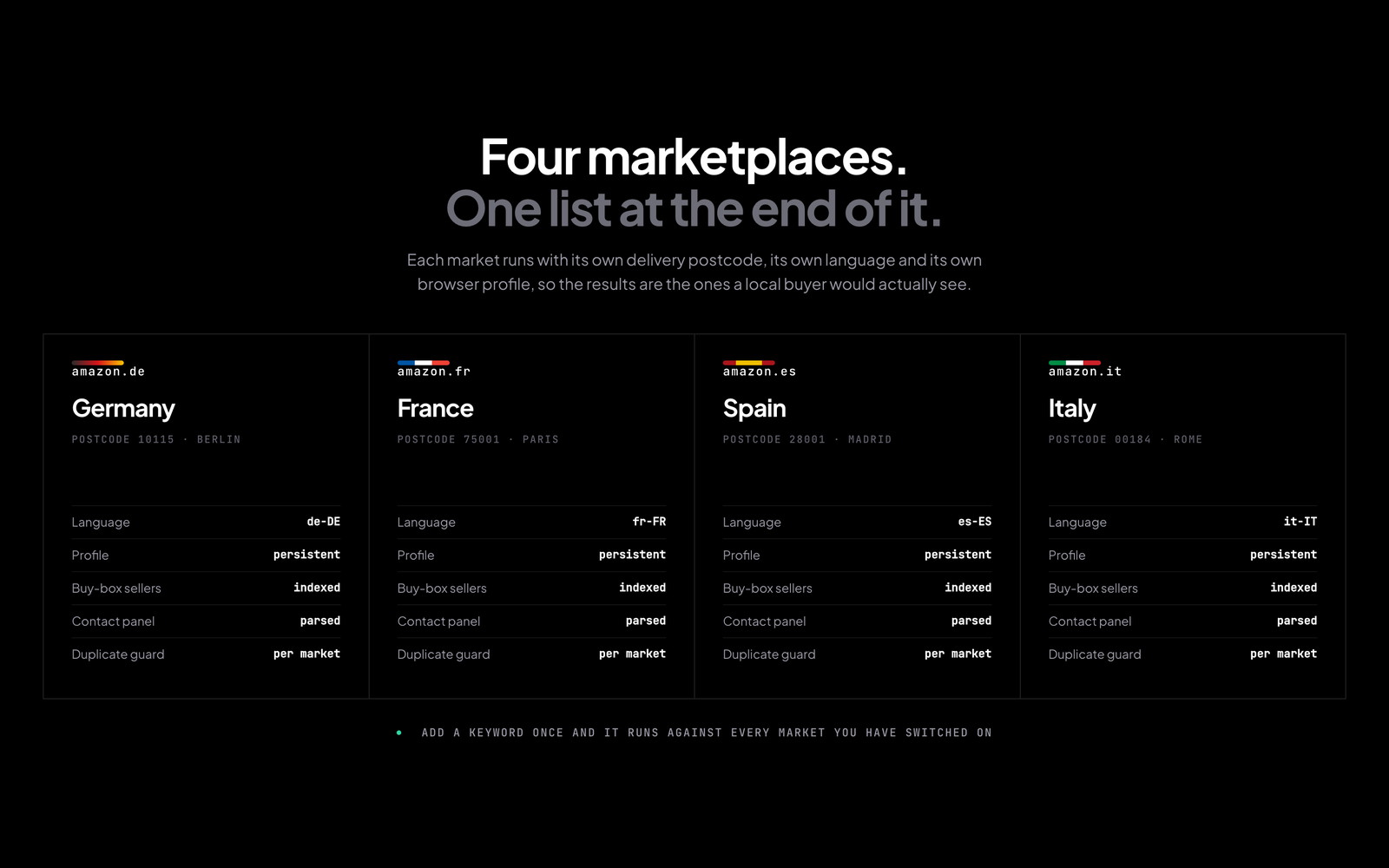
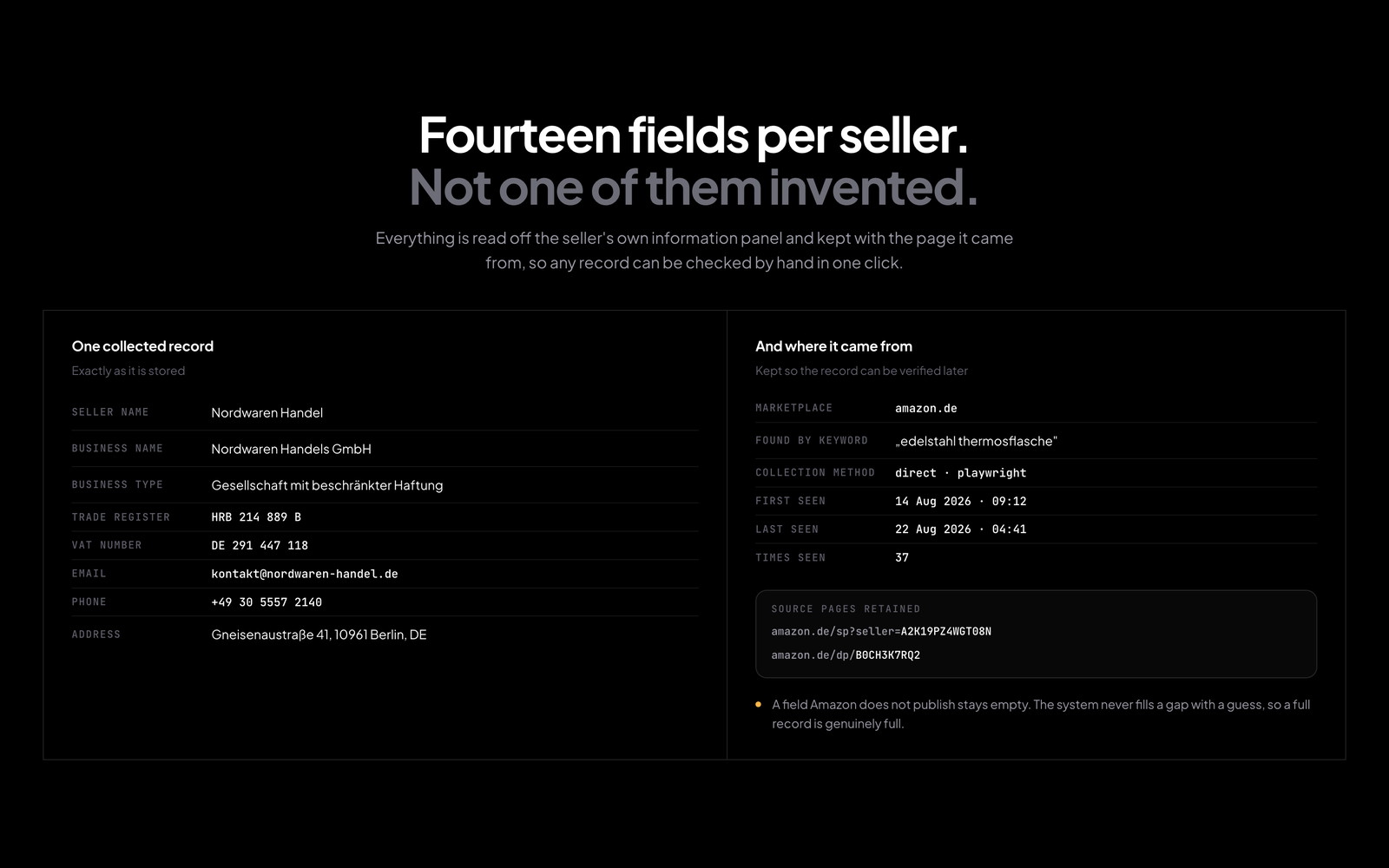
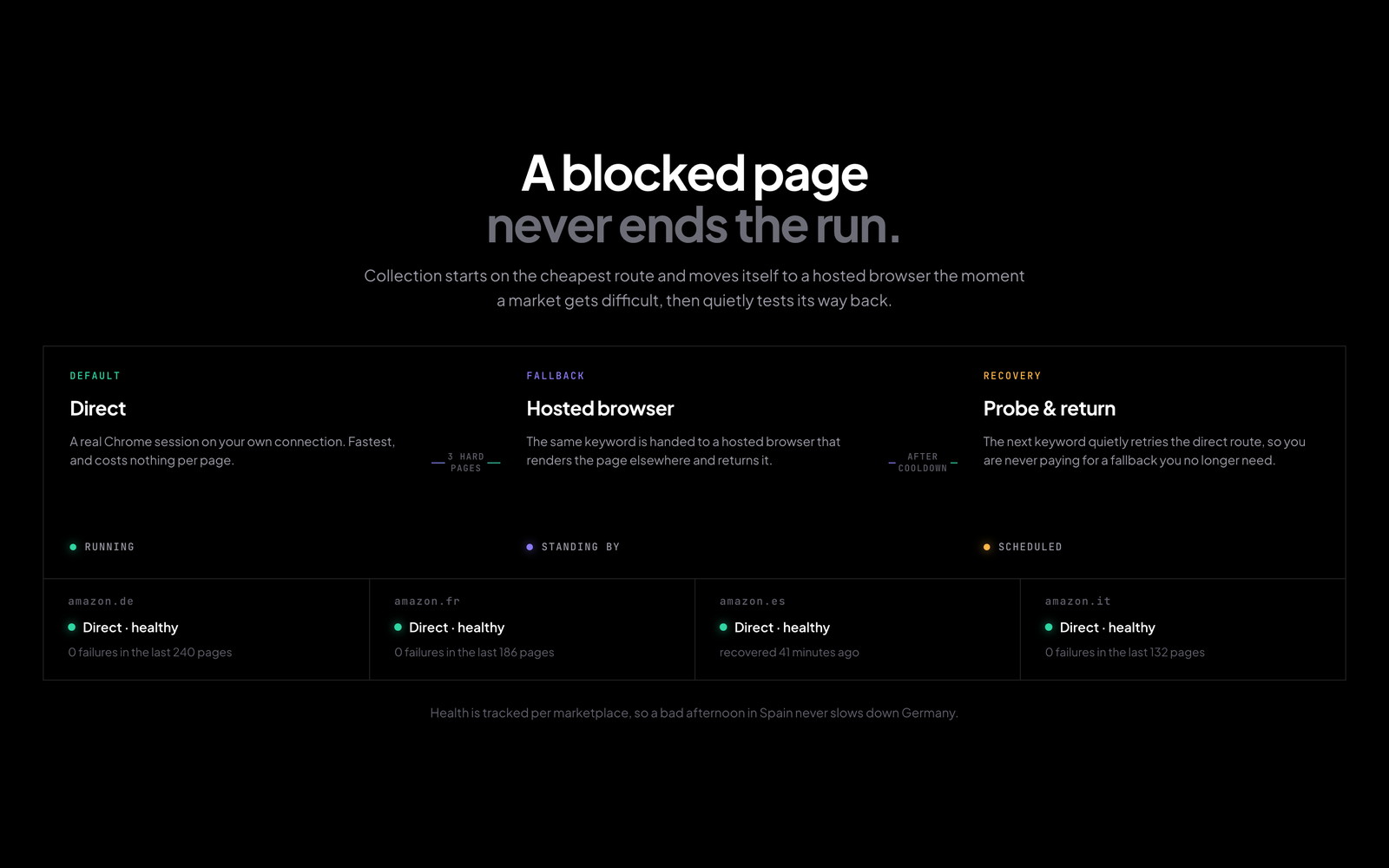
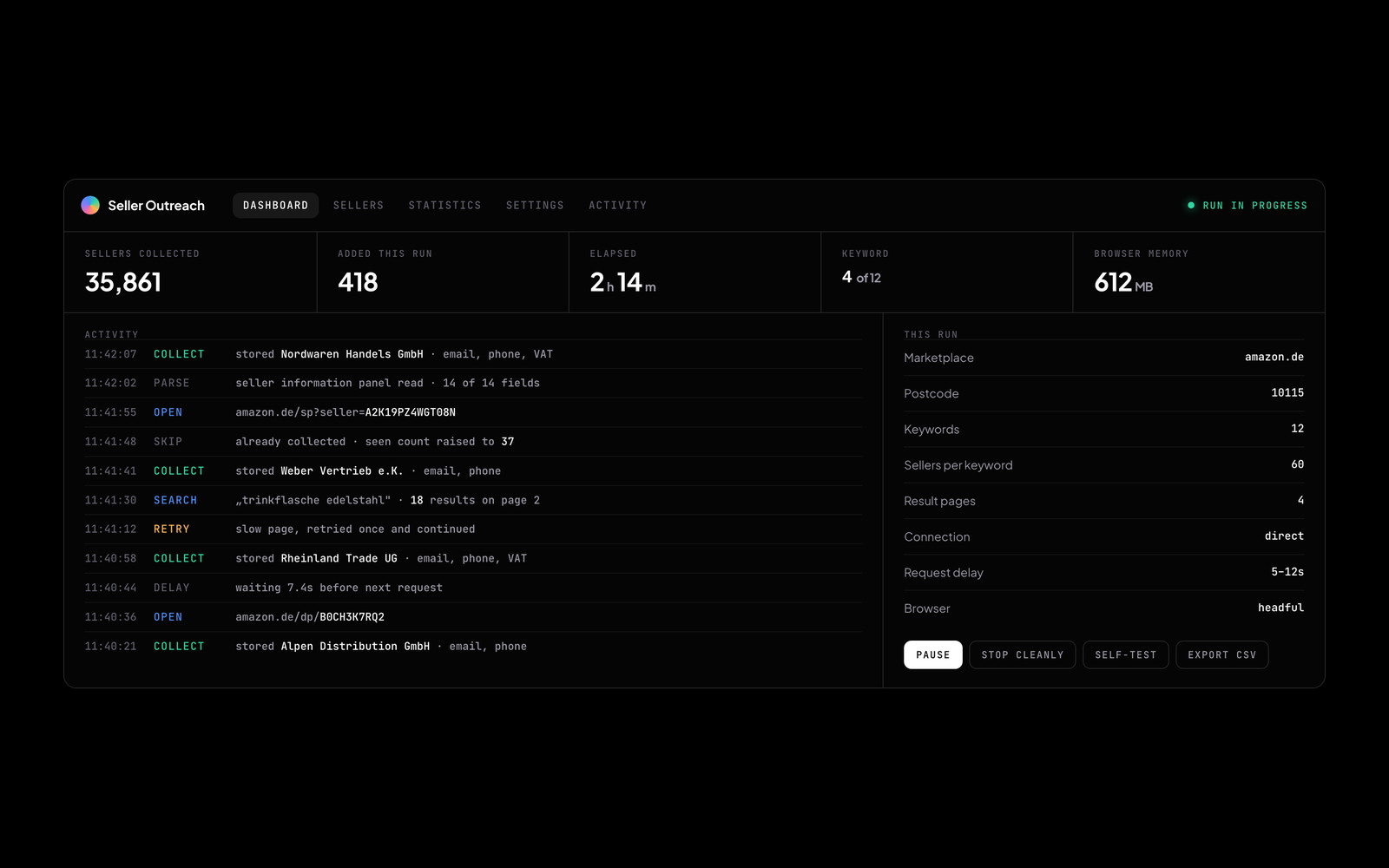
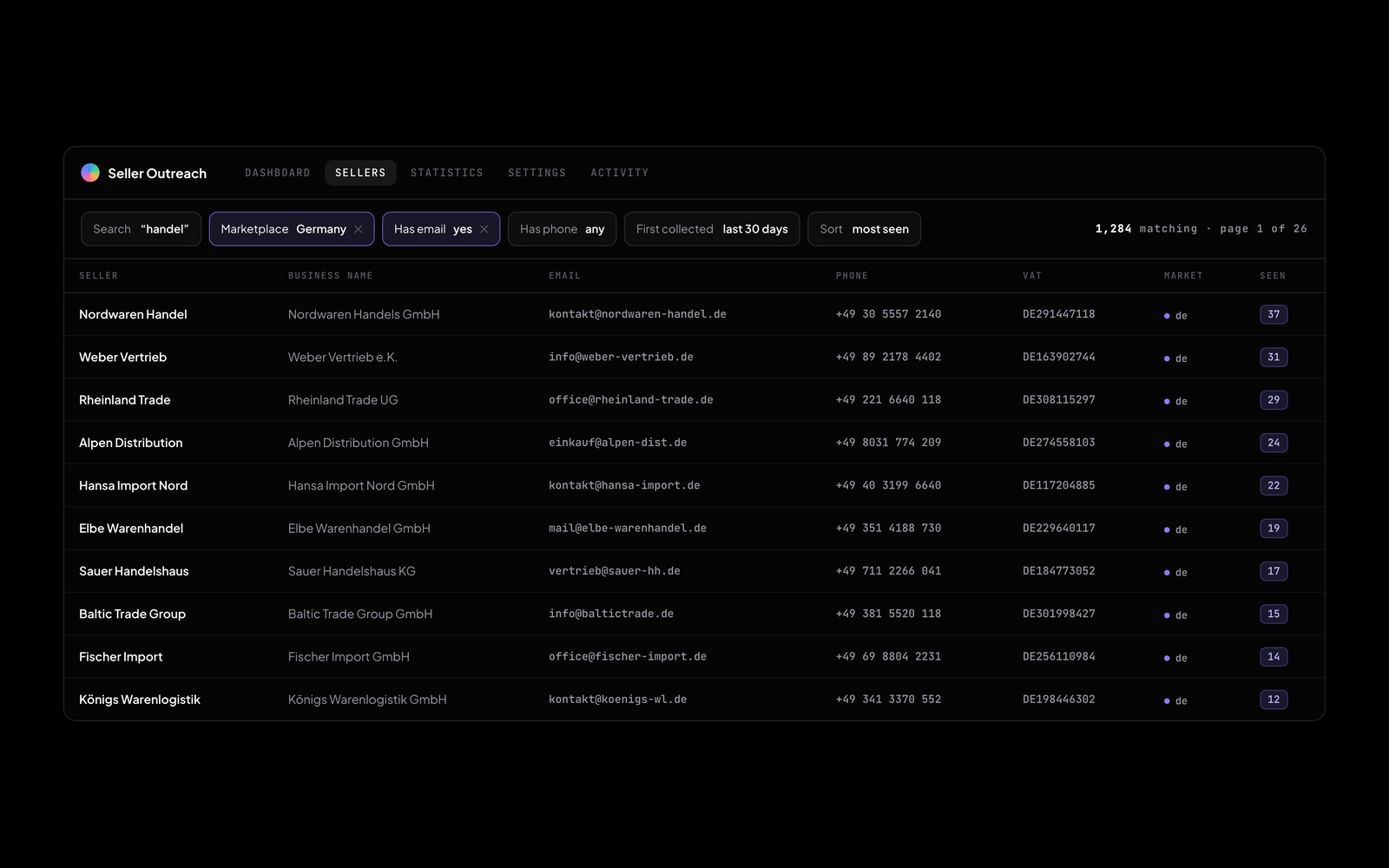
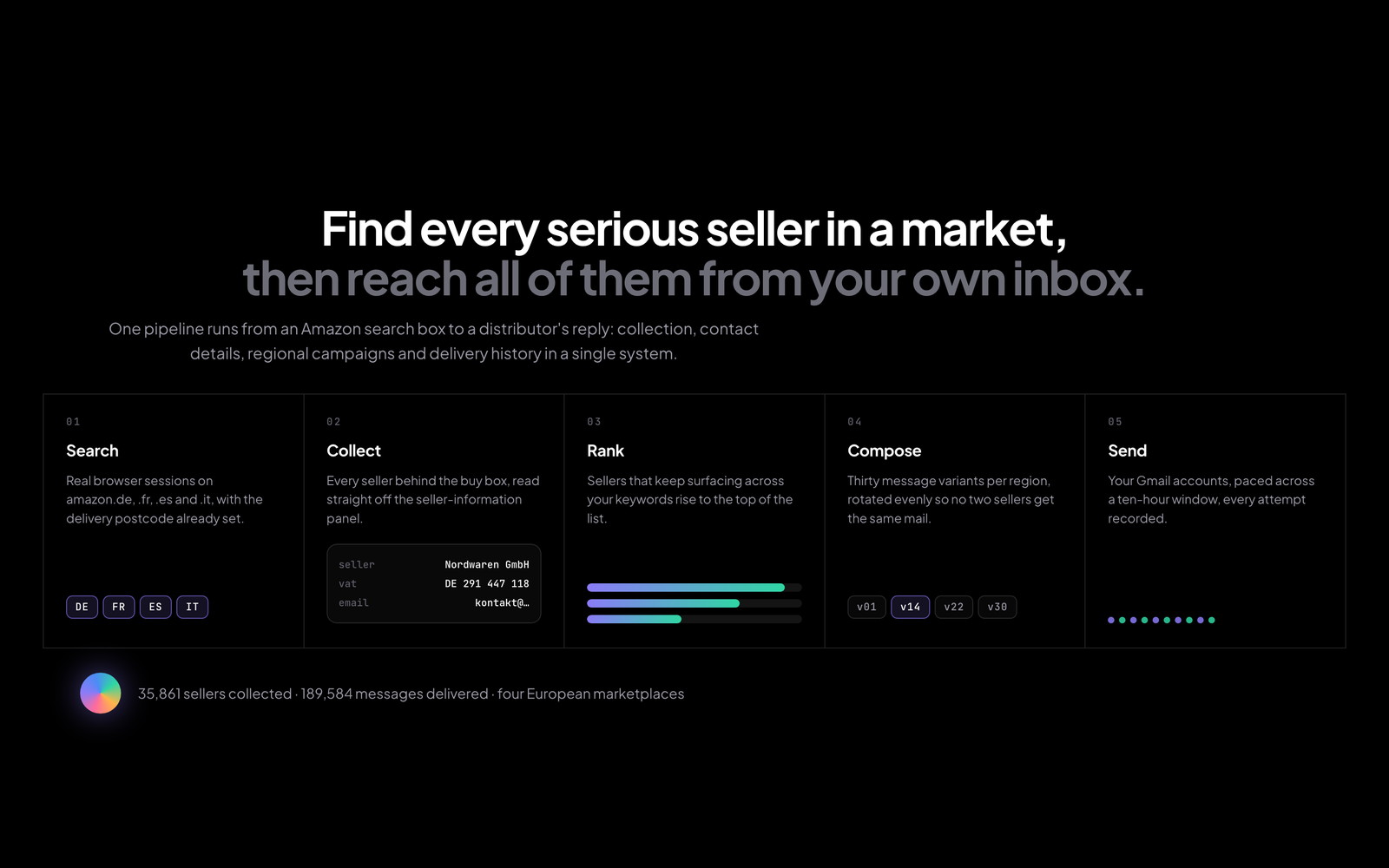
Amazon Seller Outreach closes that gap end to end. It drives a real browser session on amazon.de, amazon.fr, amazon.es and amazon.it with the delivery postcode already set, walks the search results the way a local buyer would see them, and reads the full business panel behind every buy box: legal name, business type, trade register, VAT number, email, phone and complete address, together with the exact pages the record came from. Nothing is inferred. A field Amazon does not publish stays empty, so when a record is full, it is genuinely full.
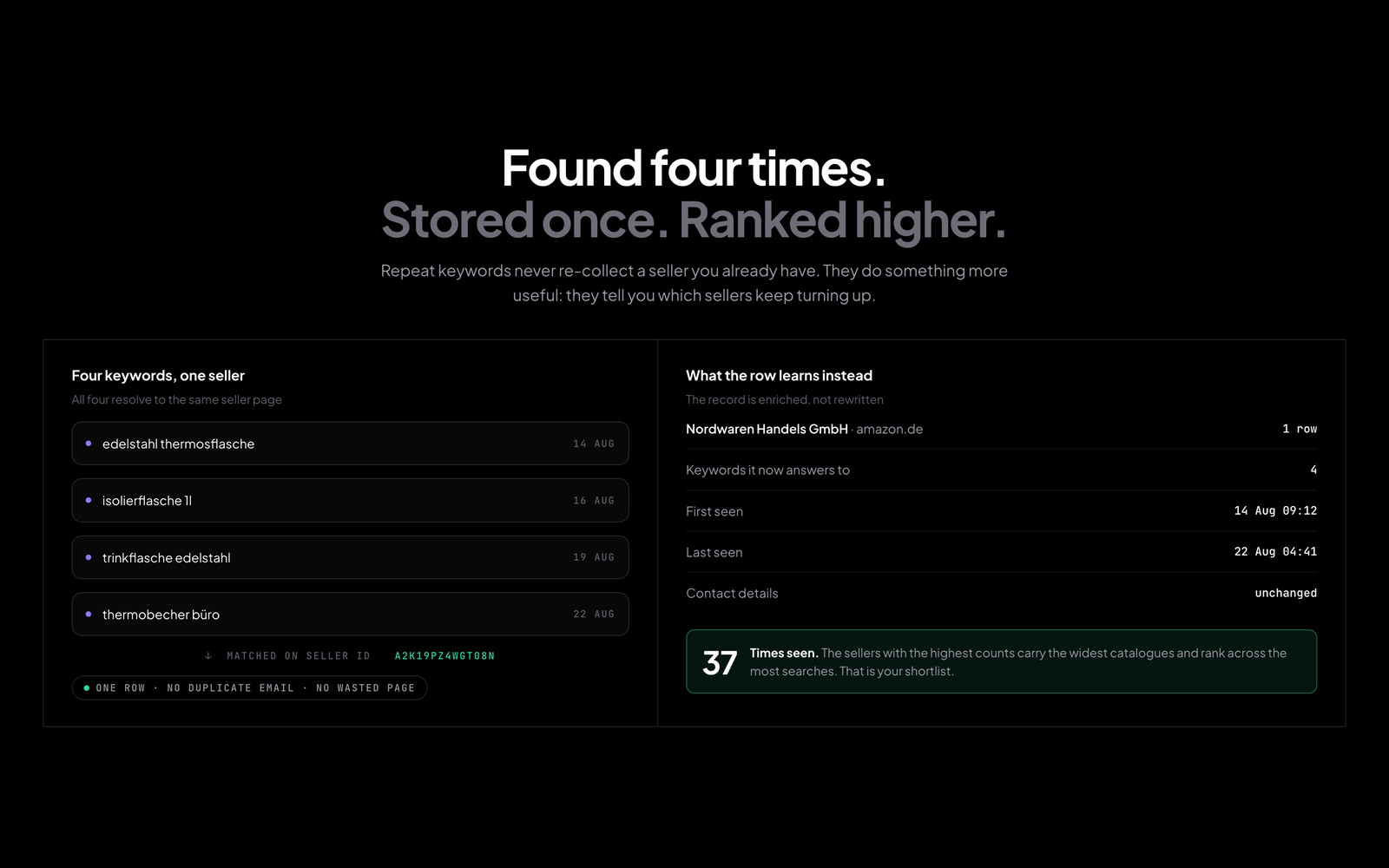
The list it builds also ranks itself. Run the same keyword twice and no seller is collected twice. Instead the row learns. Every additional keyword that surfaces the same company raises its count, so the sellers that keep appearing across your entire search set rise to the top on their own. Those are the ones carrying the widest catalogues and holding the most search real estate: your shortlist, without you having to guess at it.
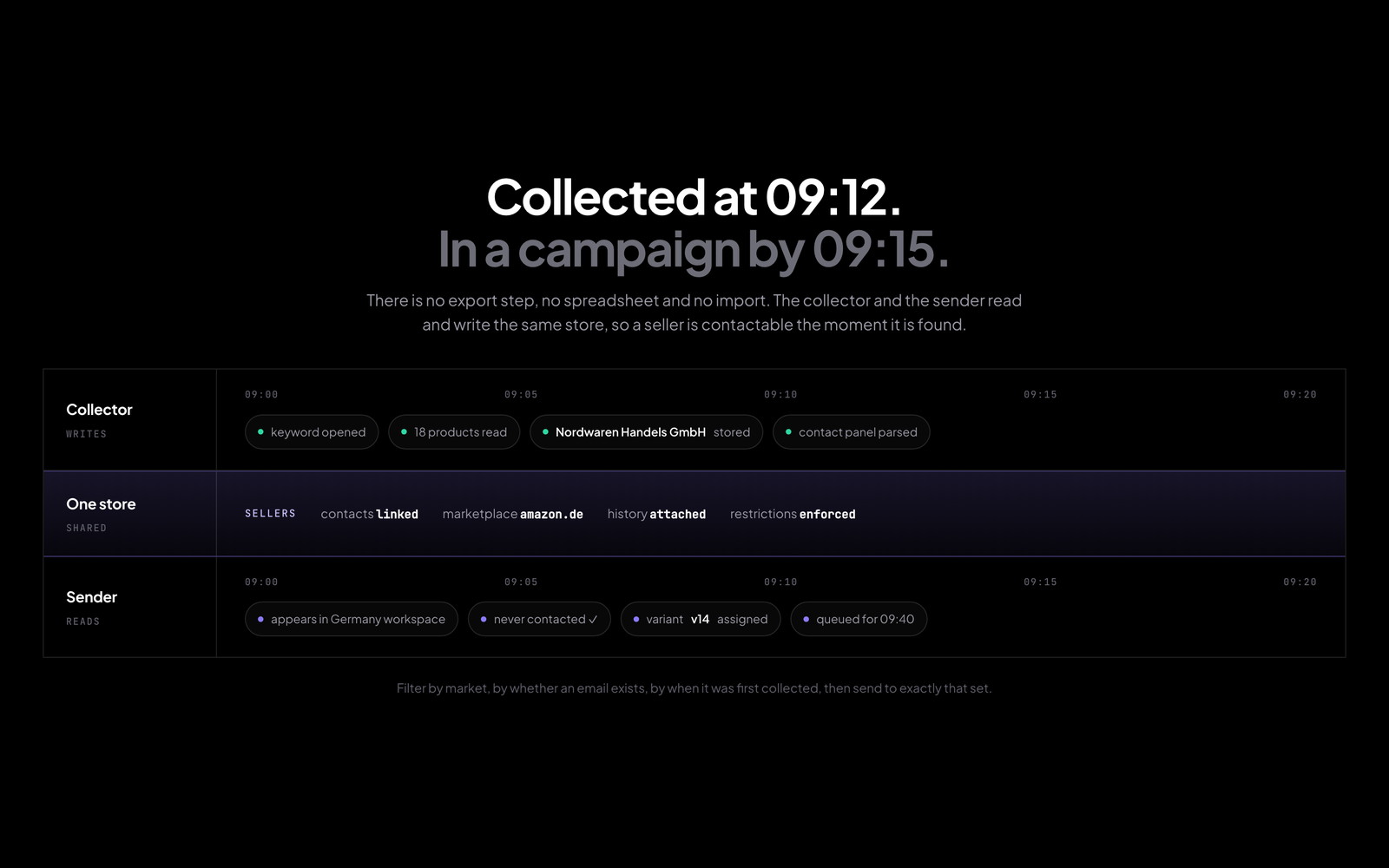
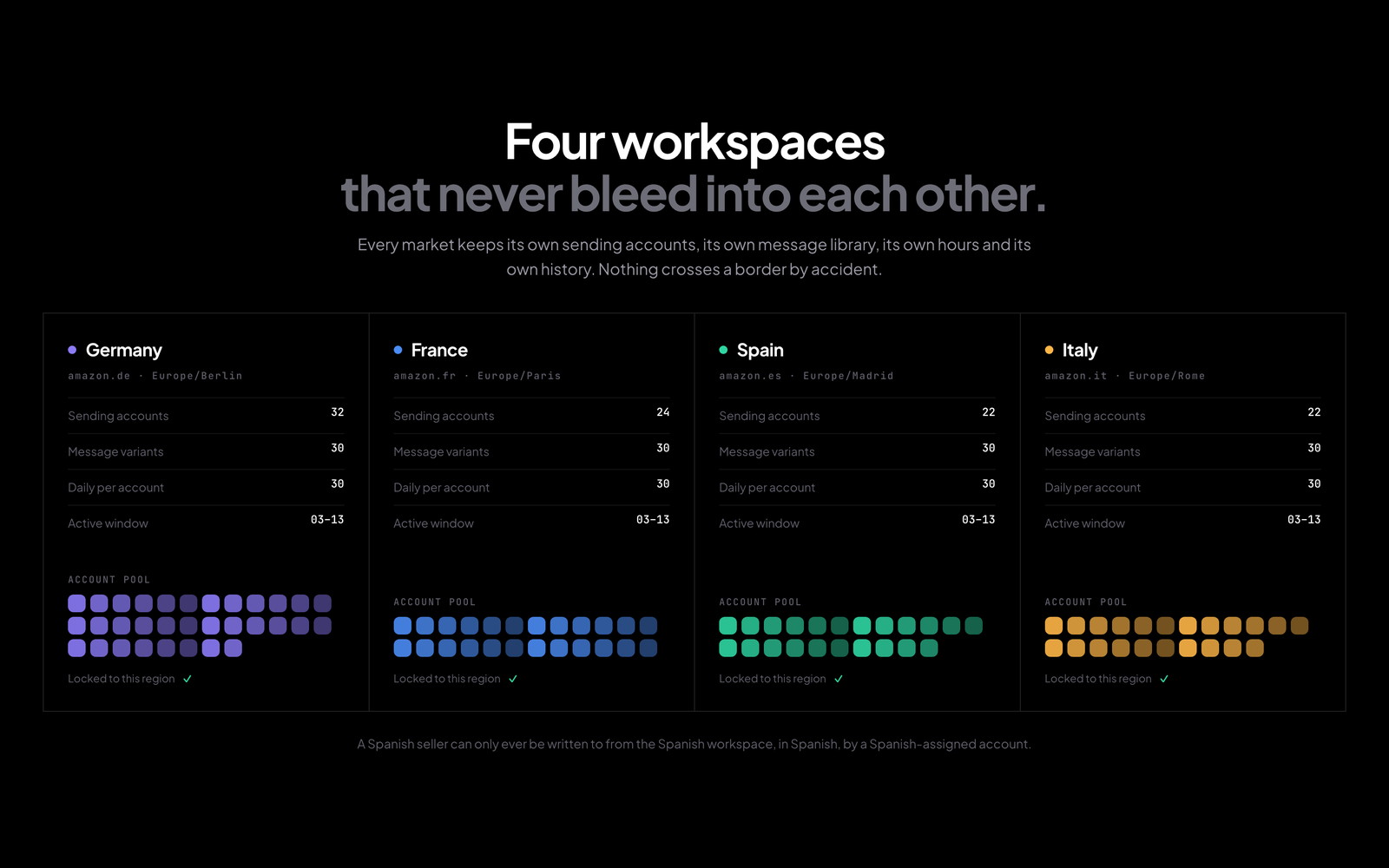
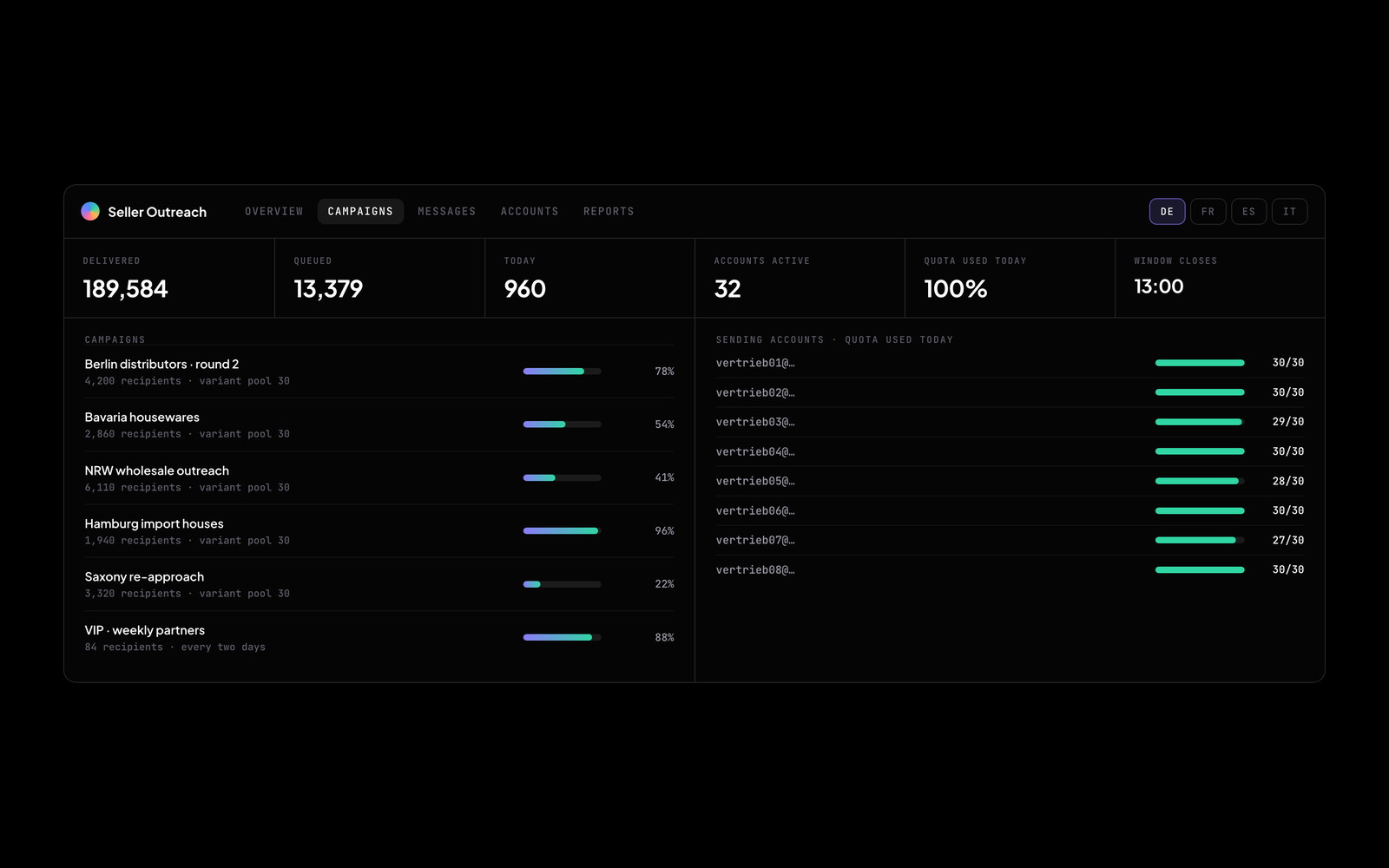
Then the second half takes over, in the same system and against the same database. There is no export, no spreadsheet and no import step. A seller collected at 09:12 is selectable in a campaign at 09:15. Germany, France, Spain and Italy are four sealed workspaces, each with its own sending accounts, its own message library in its own language, its own hours and its own history. A Spanish seller can only ever be written to from the Spanish workspace, by a Spanish-assigned account, in Spanish.
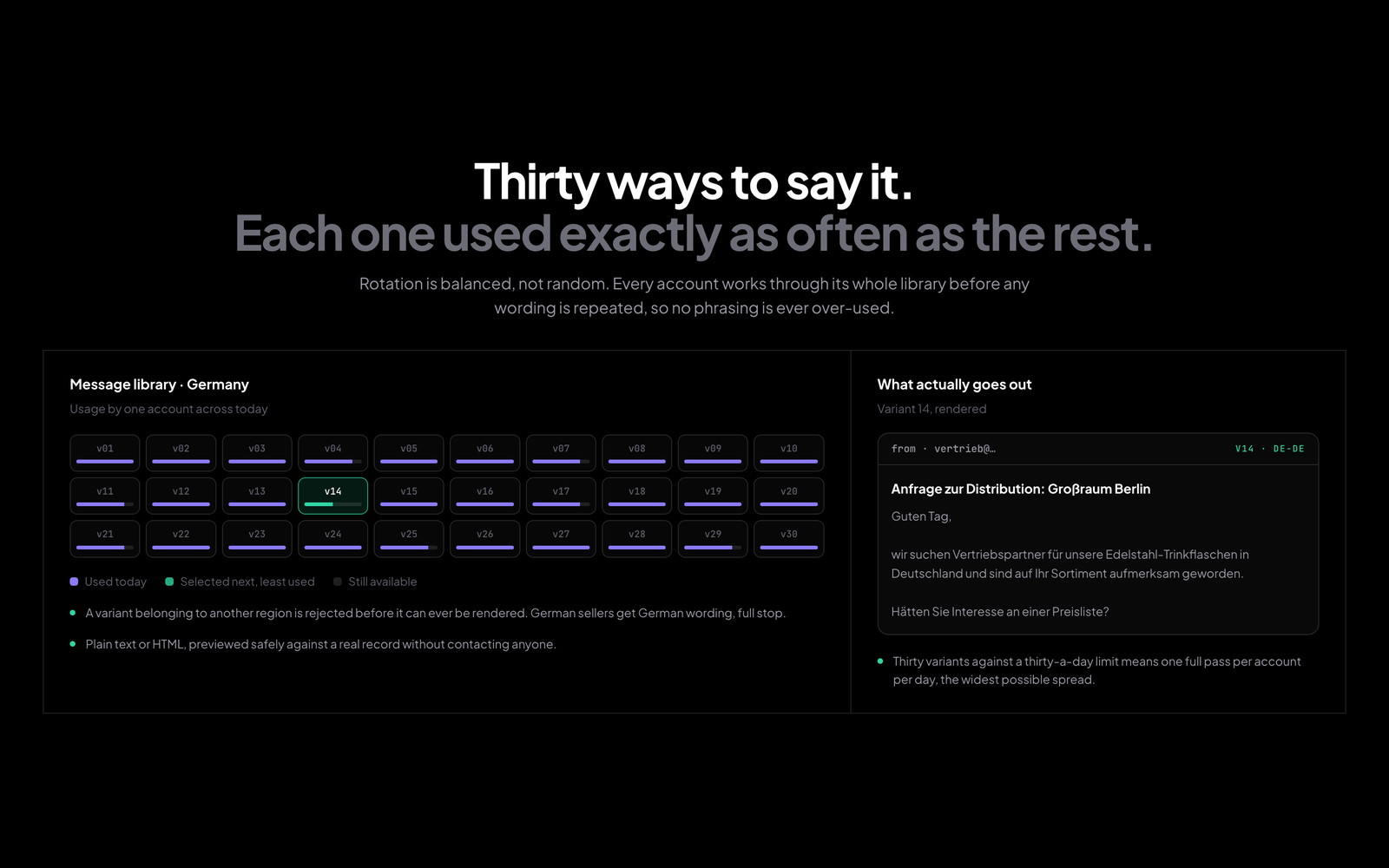
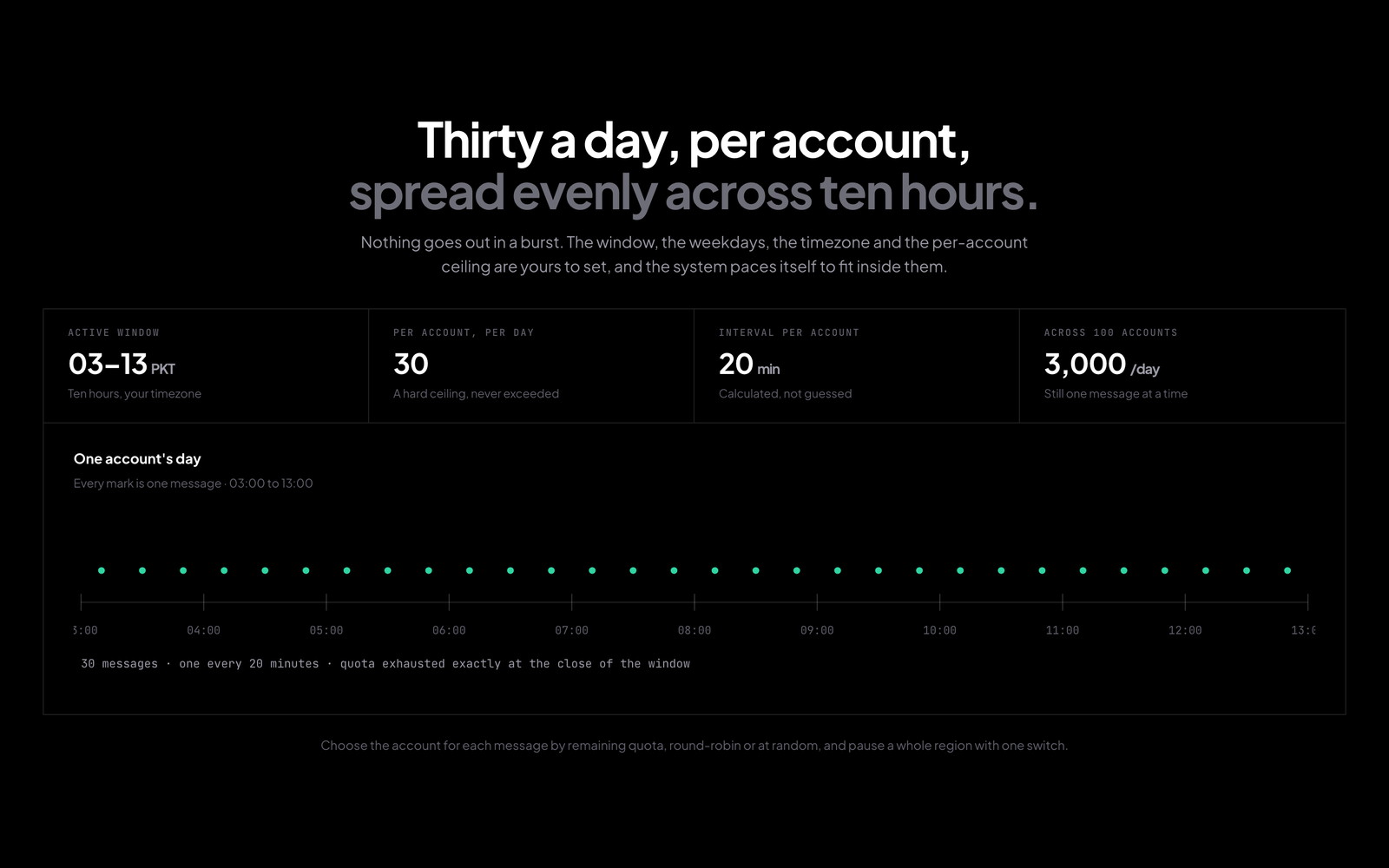
And it sends from your accounts, at your pace. Connect as many mailboxes as you like, set a daily ceiling per account and a window in your own timezone, and the scheduler spaces every message evenly across that window rather than firing them in a burst. Thirty message variants rotate in balanced order, so each account works through its whole library before any wording is used twice.
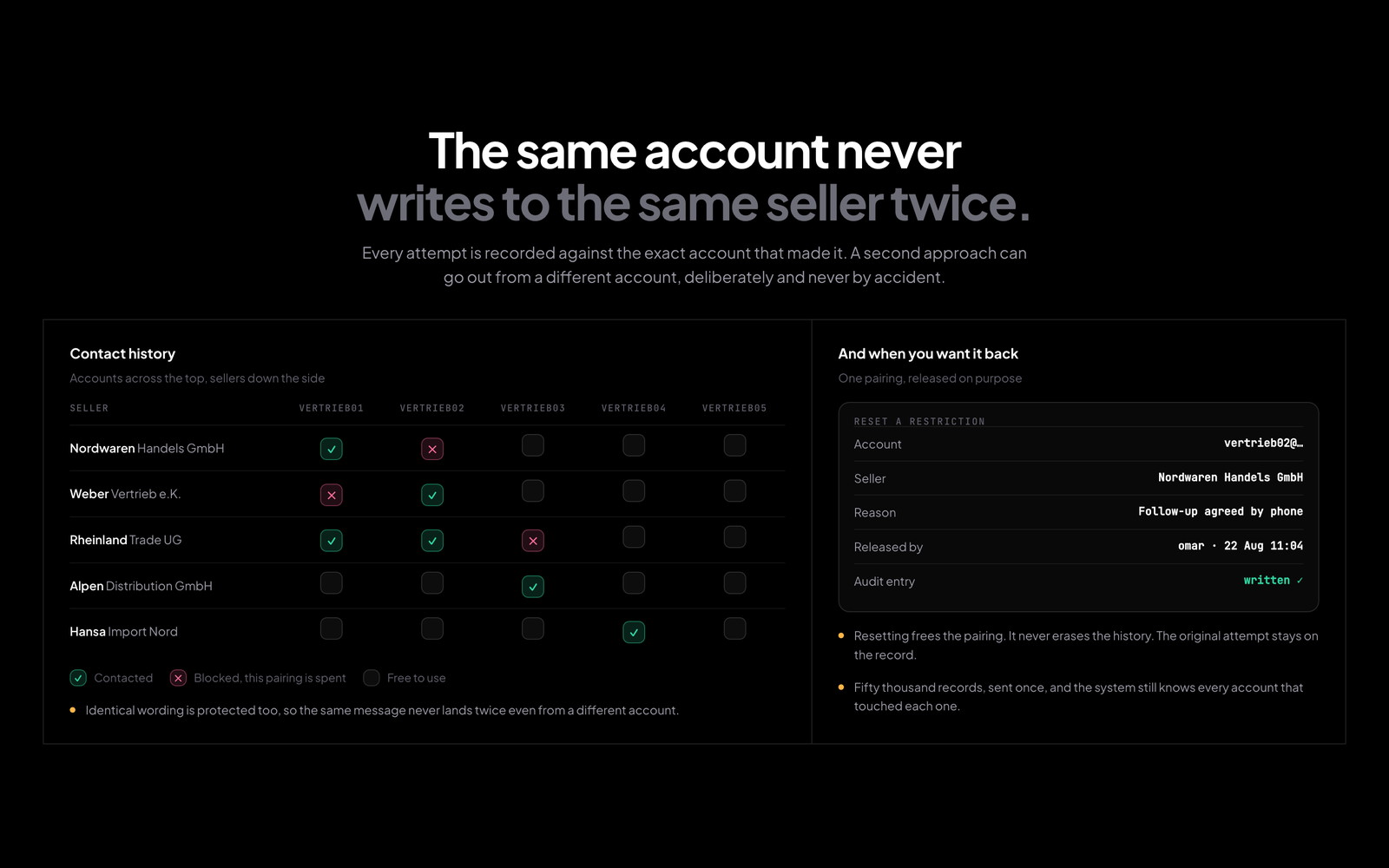
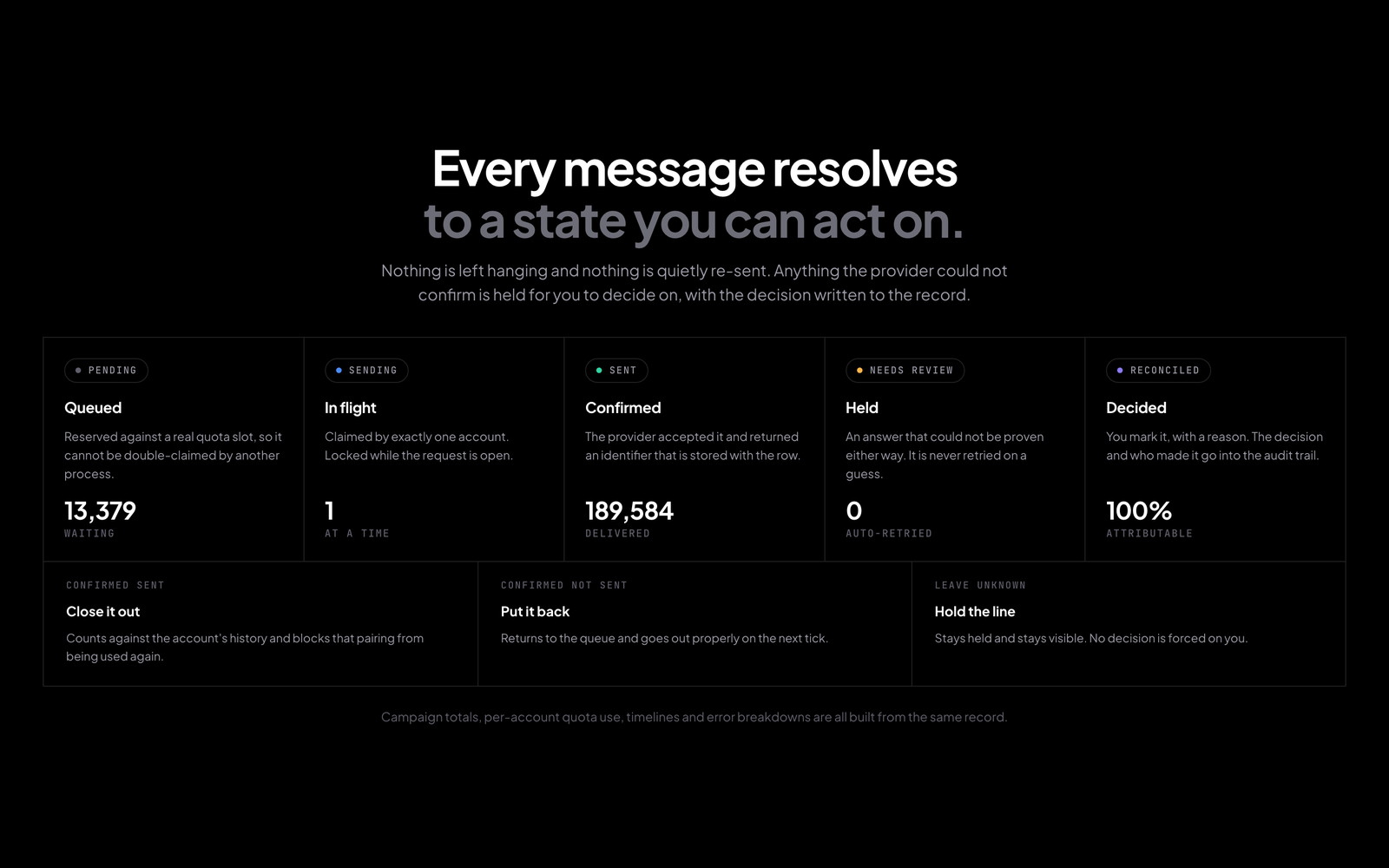
The part that matters most only shows up on the second campaign. Every attempt is written against the exact account that made it, so an account can never approach the same seller twice, while a different account still can, deliberately, whenever you choose. You can release any single pairing by hand, with a reason, and the release is recorded alongside the original attempt rather than erasing it. Anything the provider could not confirm is held for you to decide on instead of being silently retried.
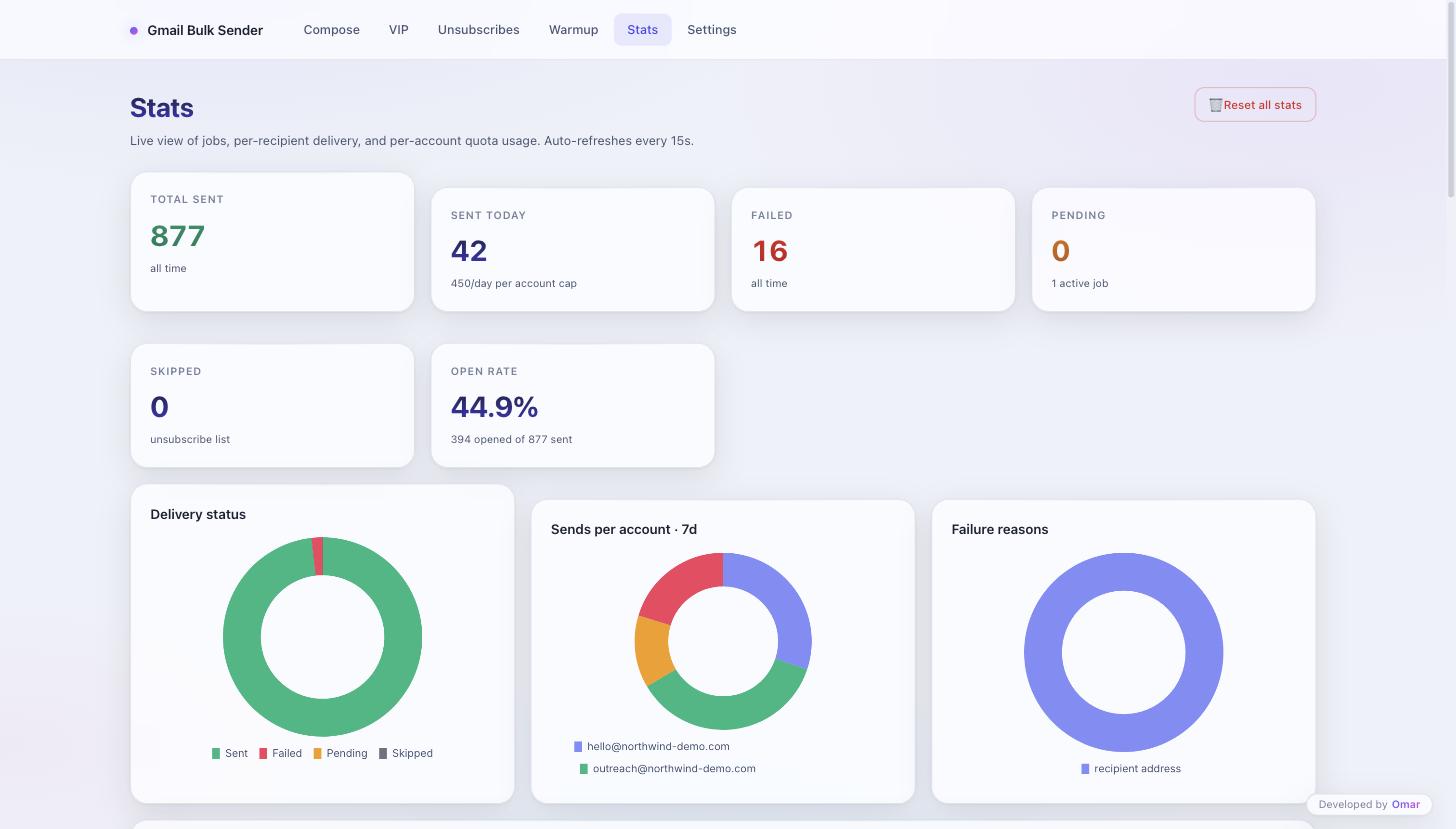
None of this is theoretical. The system has collected 35,861 sellers and delivered 189,584 messages across four marketplaces, with every one of those deliveries still attributable to the account that sent it.