Most teams that send at volume end up renting a platform. It works, until the bill scales with the list, the sending domain belongs to someone else, and the data about who was contacted and when lives somewhere you cannot query.
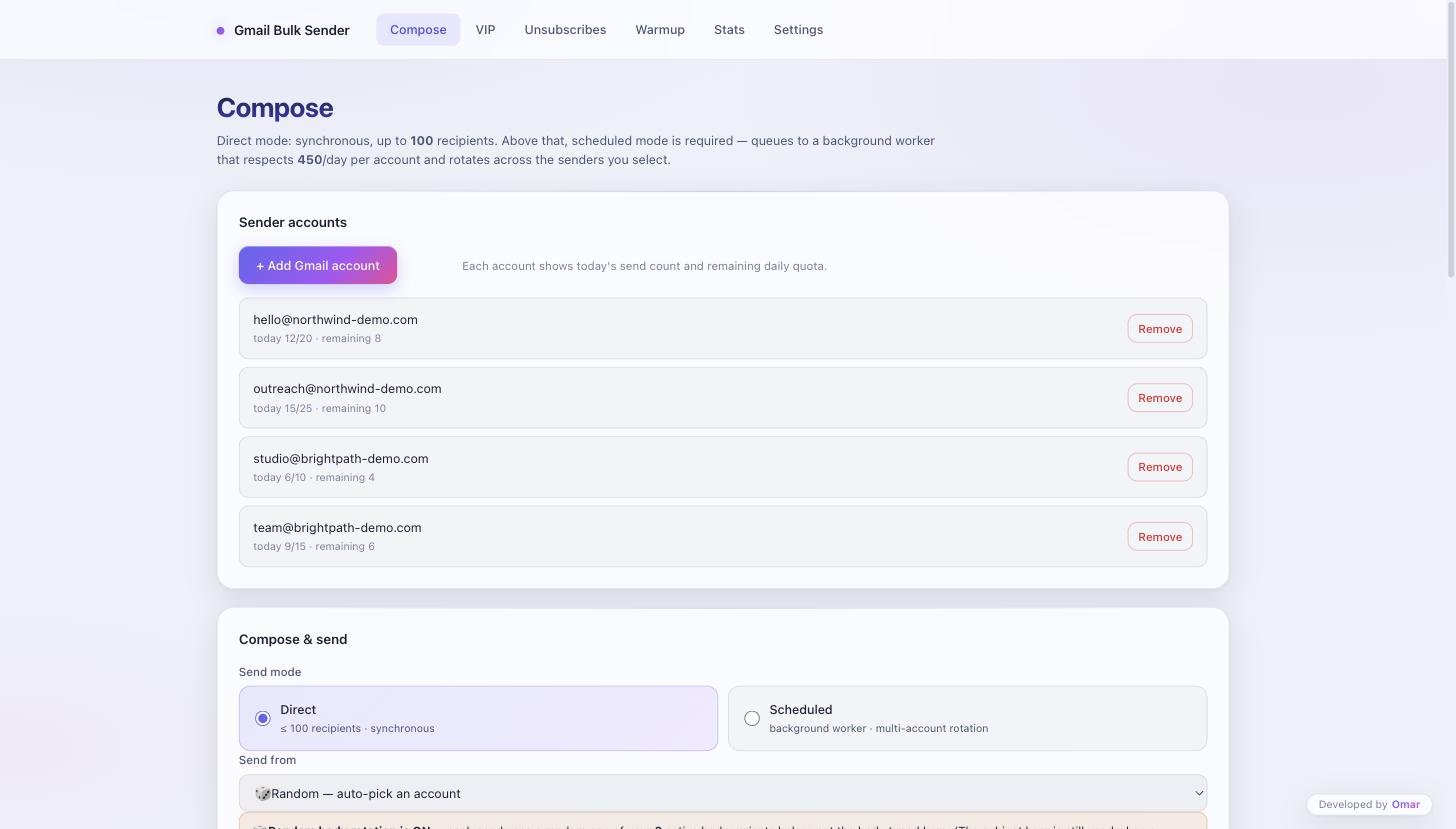
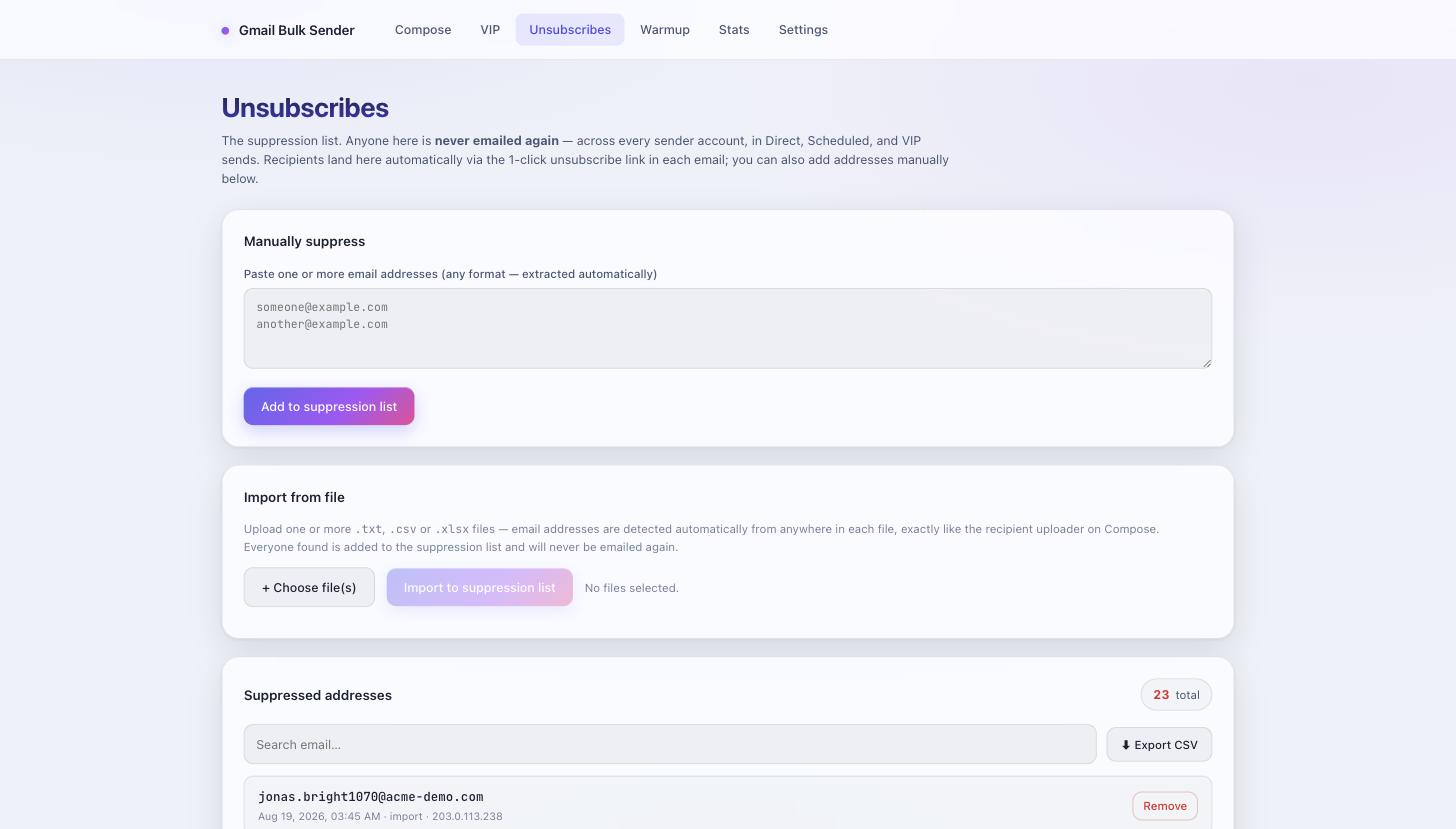
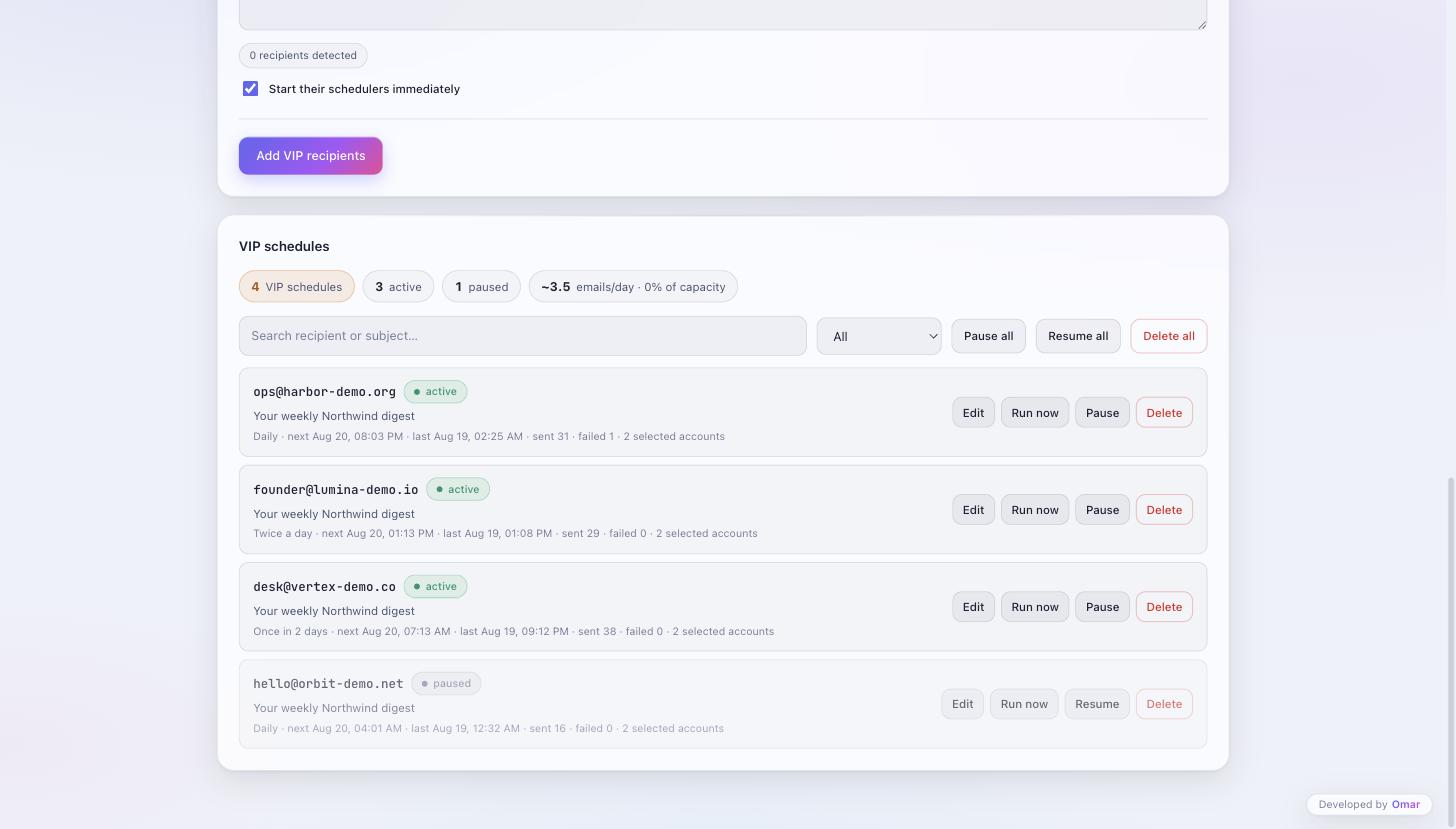
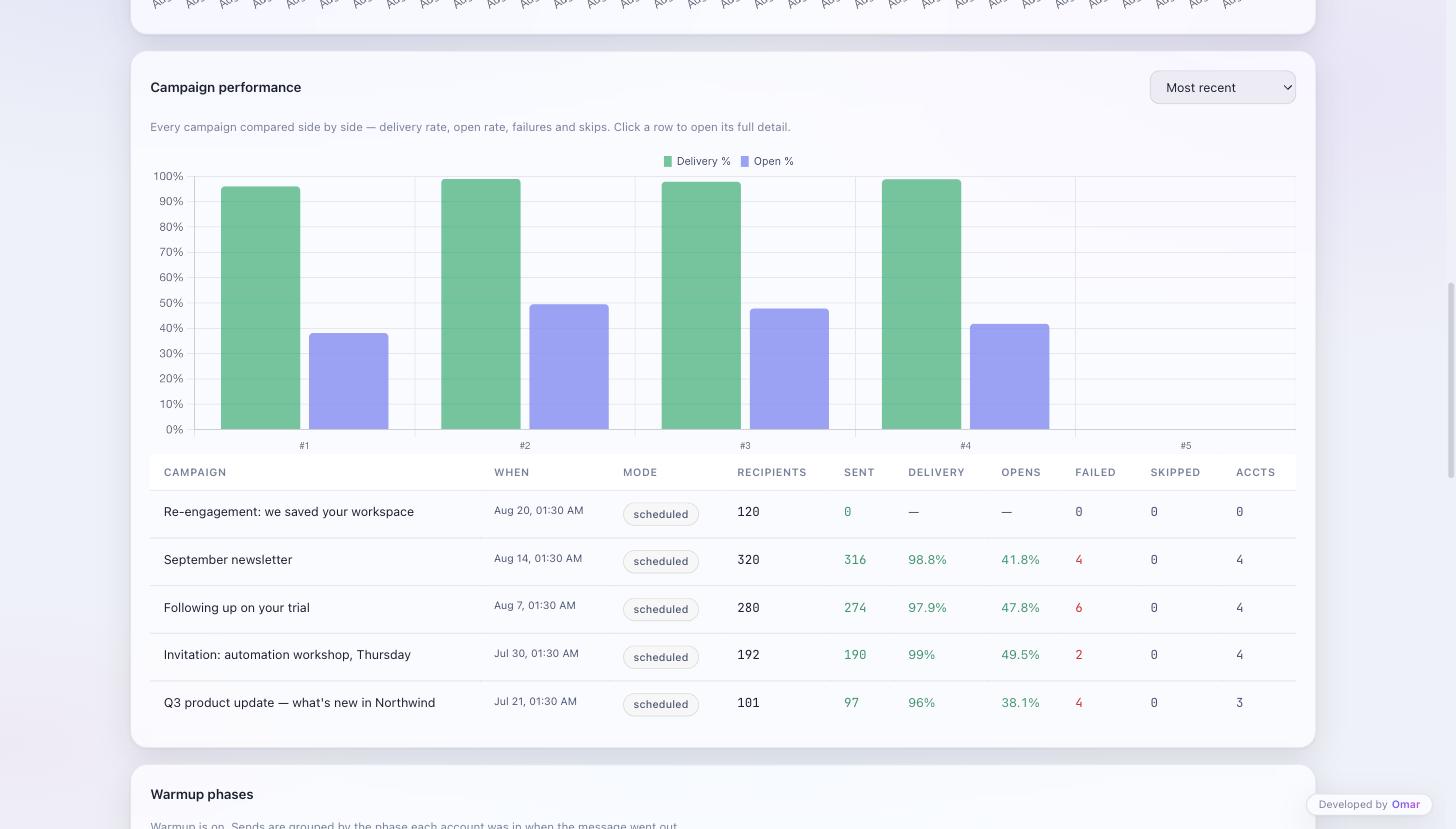
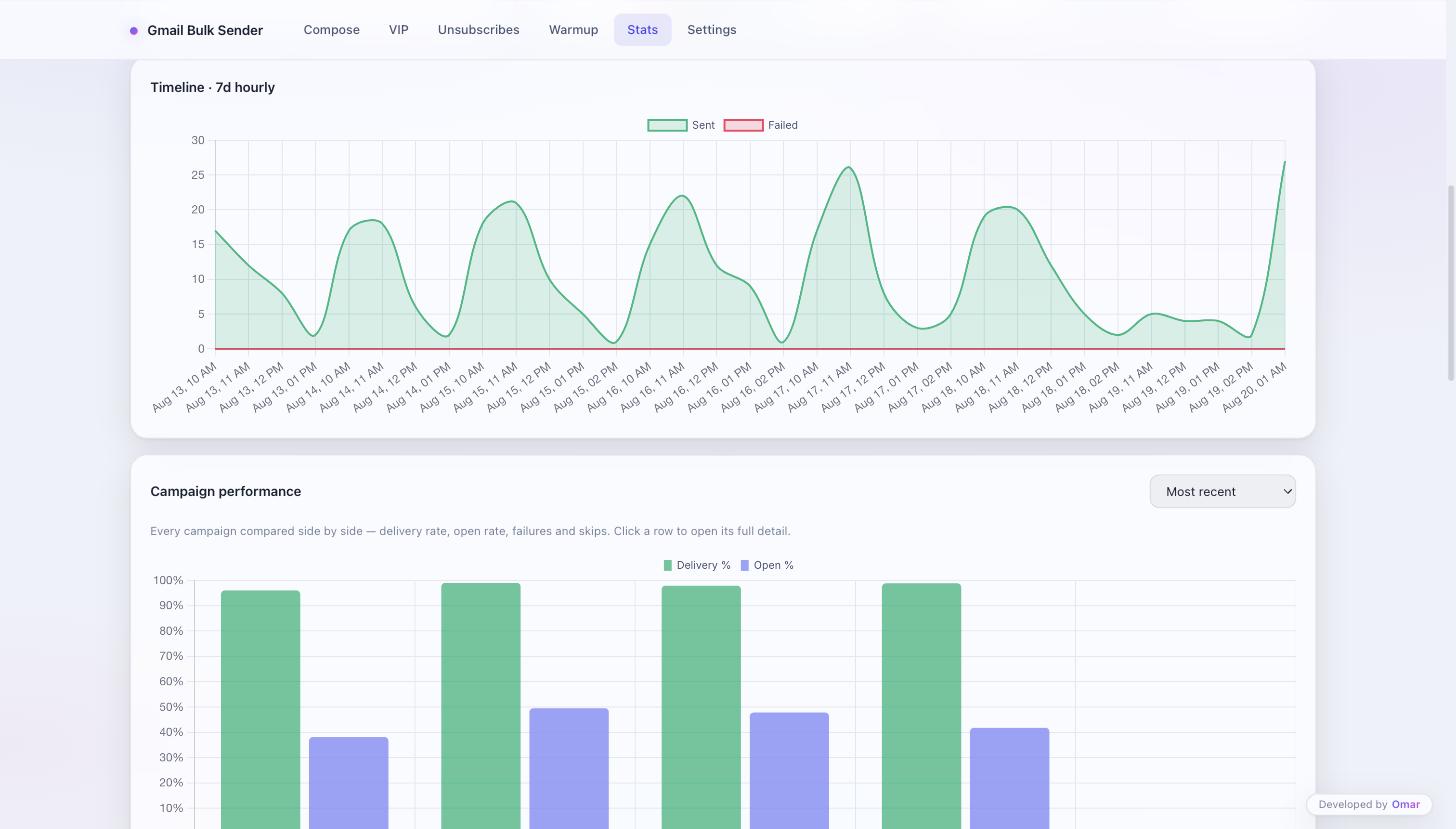
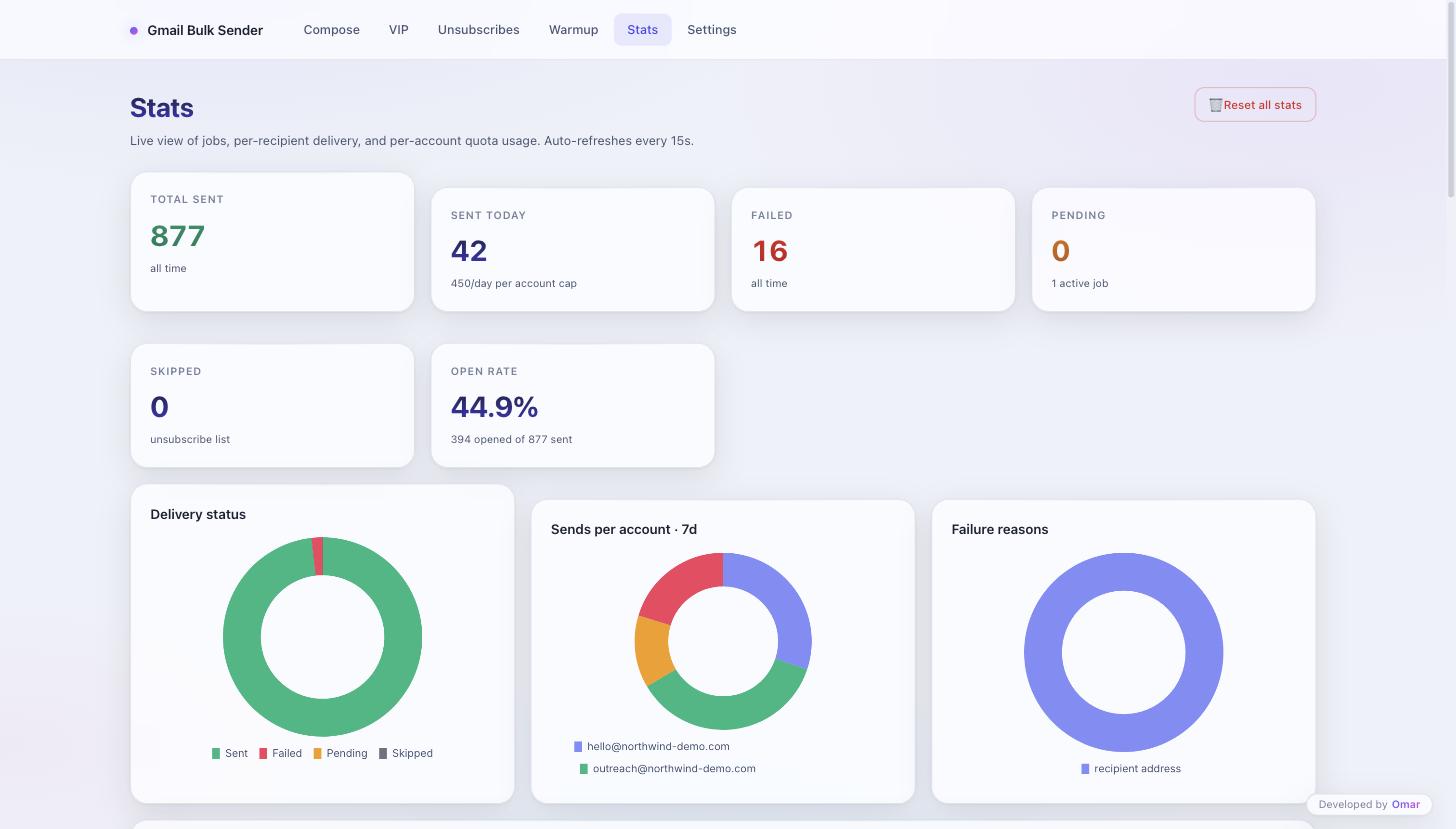
This is the other option: a sending system that runs on the mailboxes the business already owns. It connects to them directly, and takes over the parts that are tedious to do by hand and expensive to get wrong: pacing, list hygiene, suppression, and the reporting that tells you whether any of it is working.
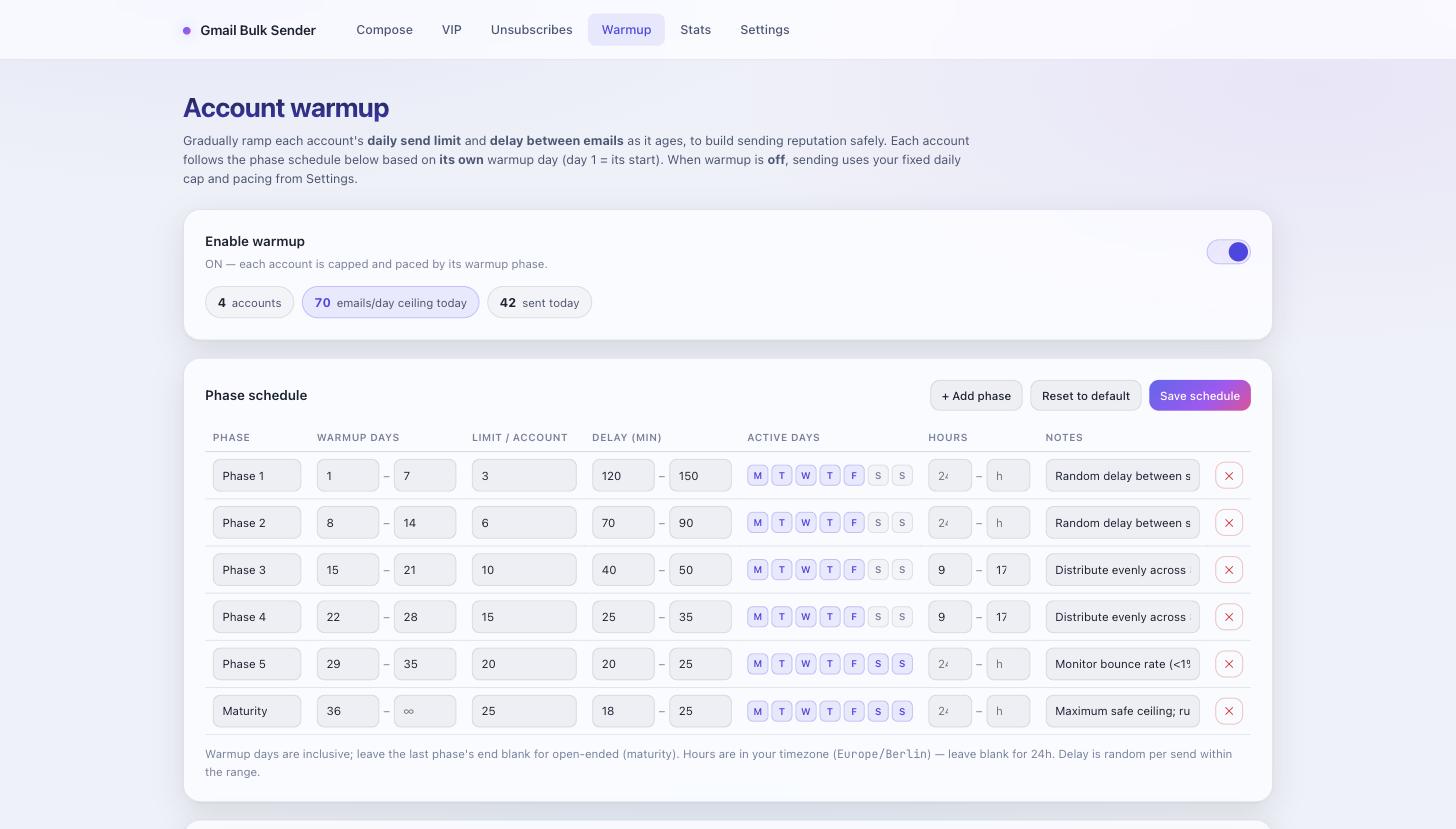
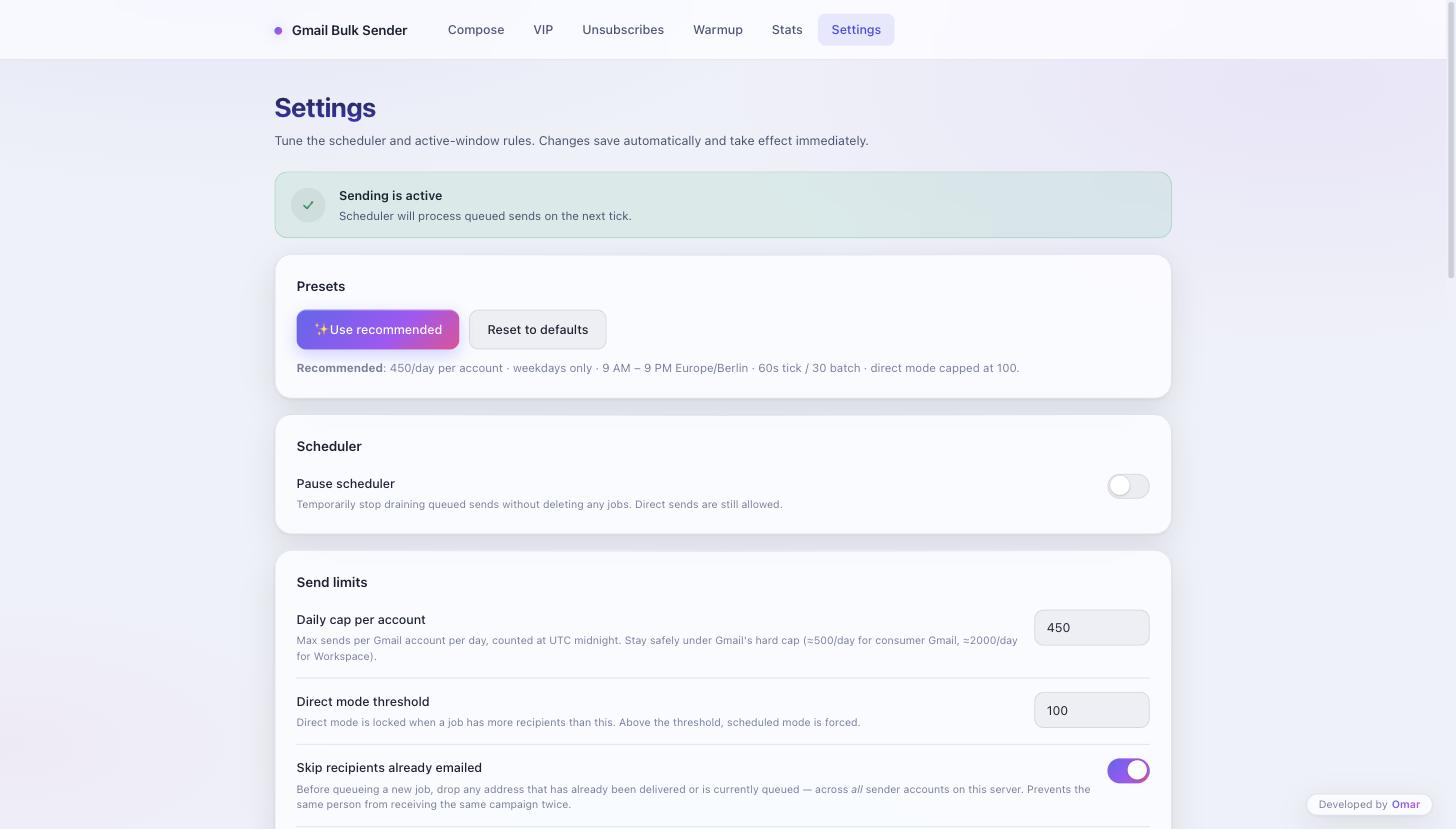
The brief was deliberately unglamorous. Sending an email is a solved problem. Sending forty thousand of them over six weeks without burning the reputation of the domain they come from is not, and almost all of the engineering sits in that gap. A consumer Gmail account will take roughly 500 messages a day before it starts refusing; a Workspace account around 2,000. Those are ceilings, not targets, and a new mailbox that goes anywhere near them in its first week will be filtered long before it is blocked.
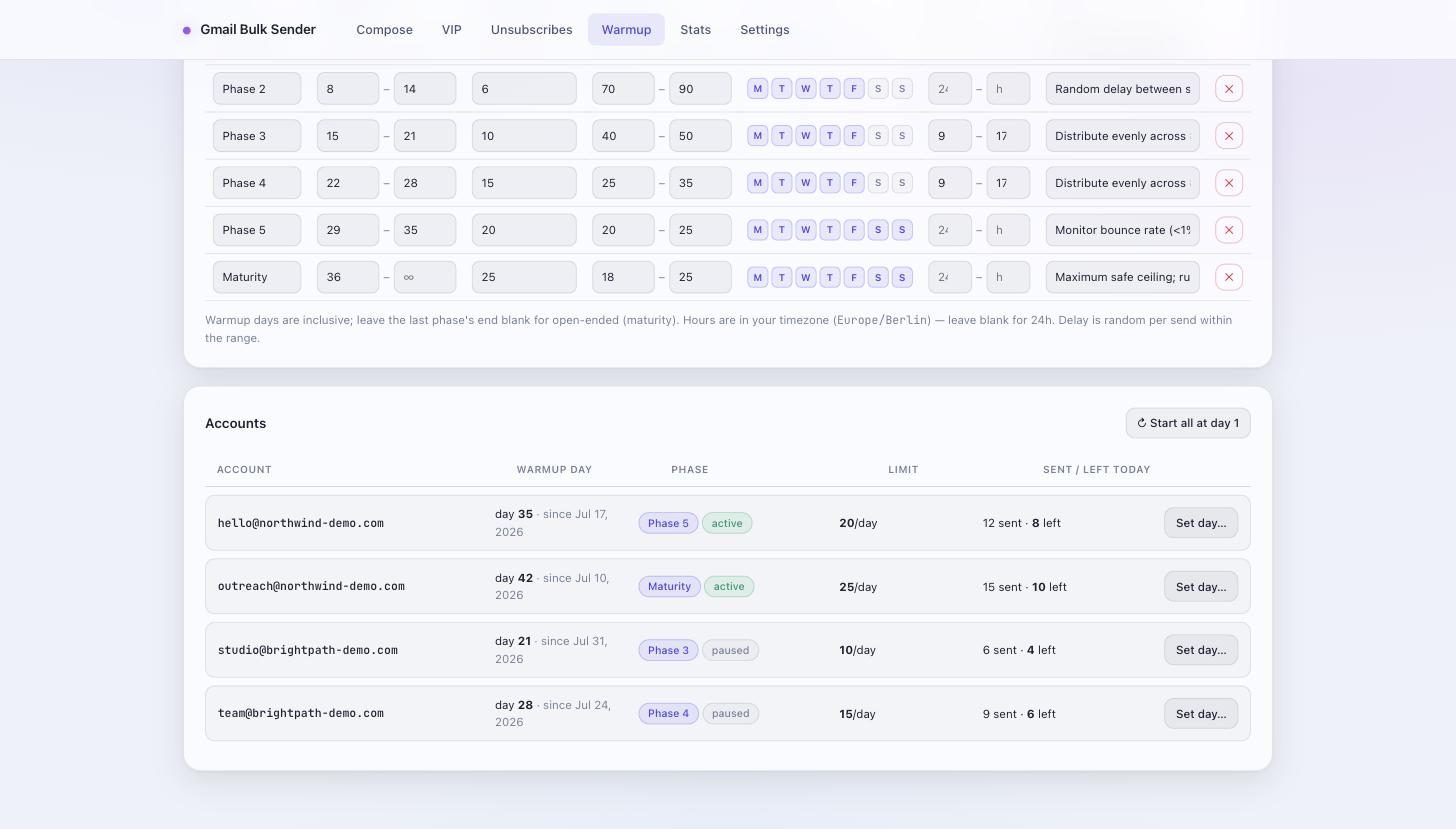
So the interesting parts of this system are the ones that hold it back: the ramp that decides how much a given account is allowed to send today, the window that decides when, and the suppression list that decides who never hears from you again regardless of what any campaign says.