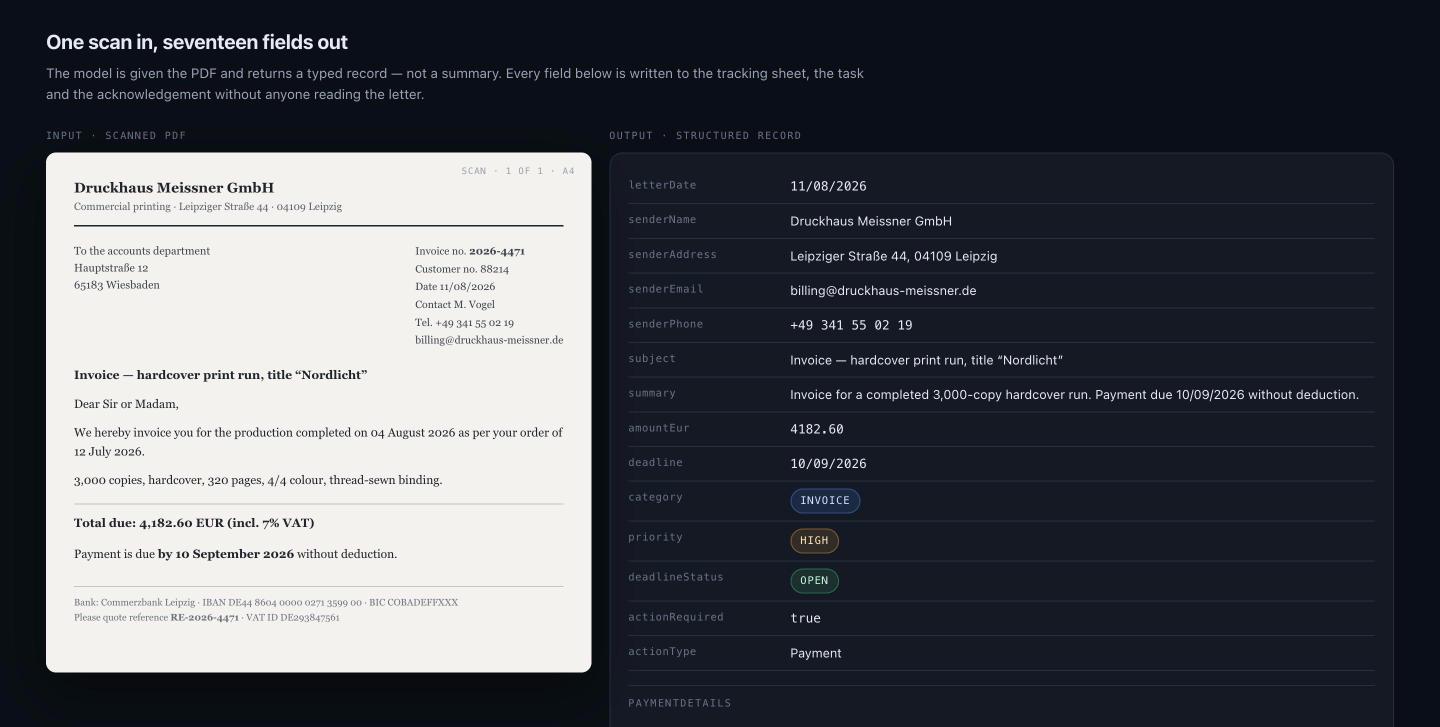
Post still arrives. Invoices, notices, payment reminders, tax correspondence, letters from courts and authorities. It lands as a scanned PDF, and someone opens it, reads it, works out what it is and how urgent it is, renames it, files it, raises a task for whoever has to act, adds a row to a tracker, and replies to say it arrived.
That loop is the whole job, and it runs once per letter. It is not difficult work, which is exactly why it gets deferred. And deferred post is how a payment deadline gets missed by a fortnight.
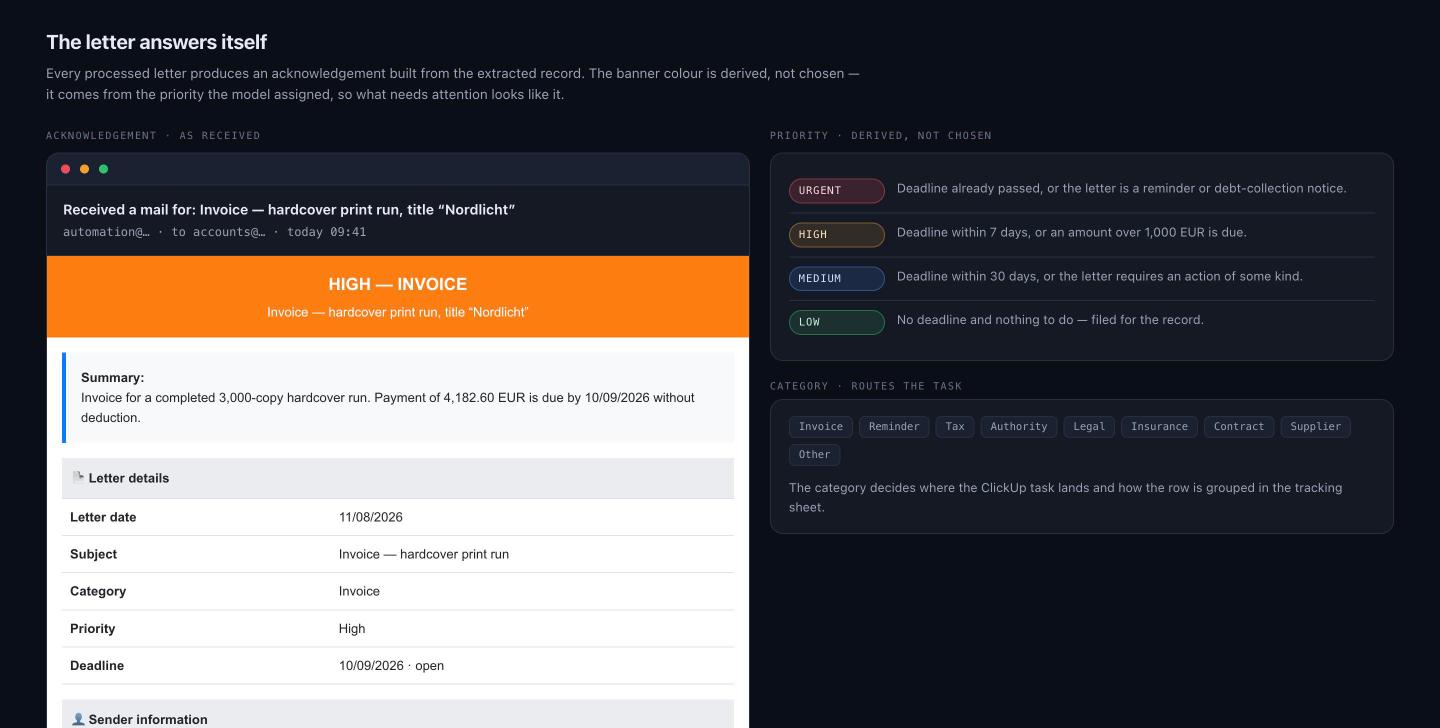
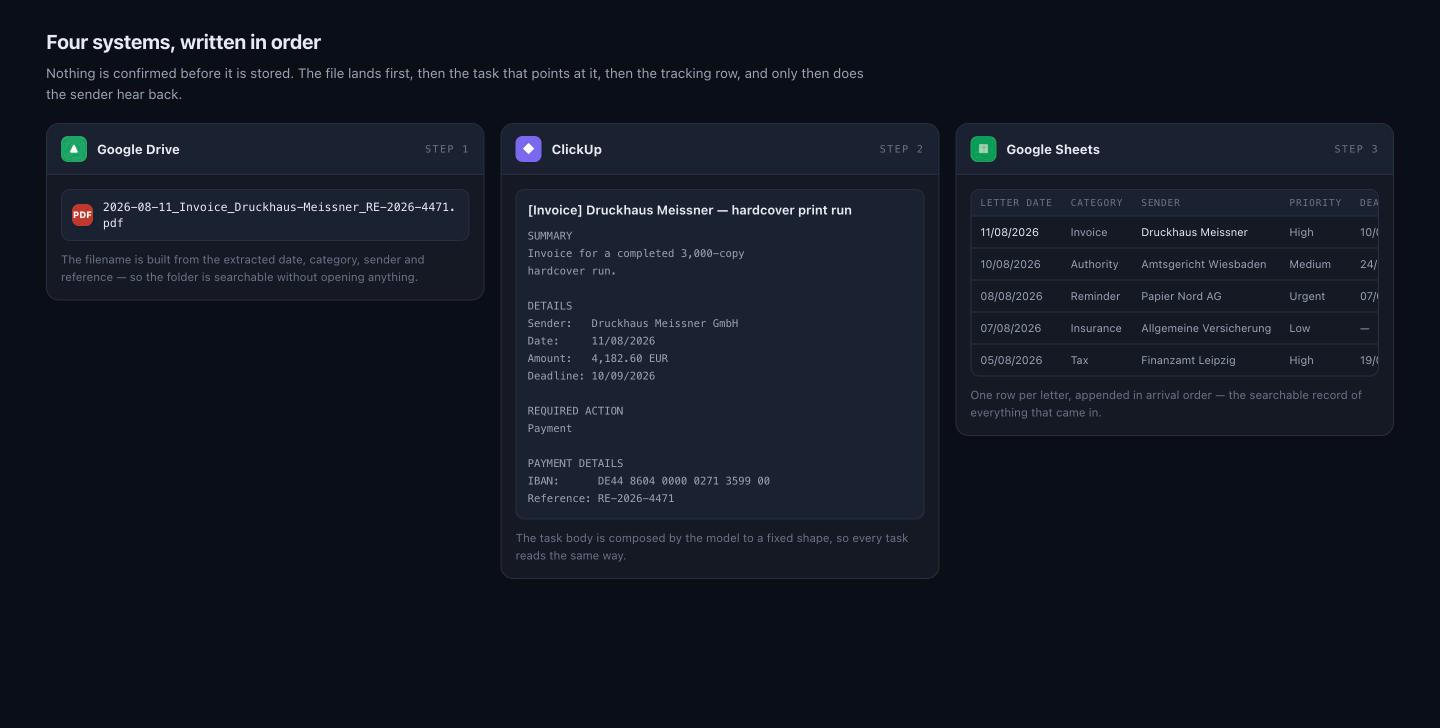
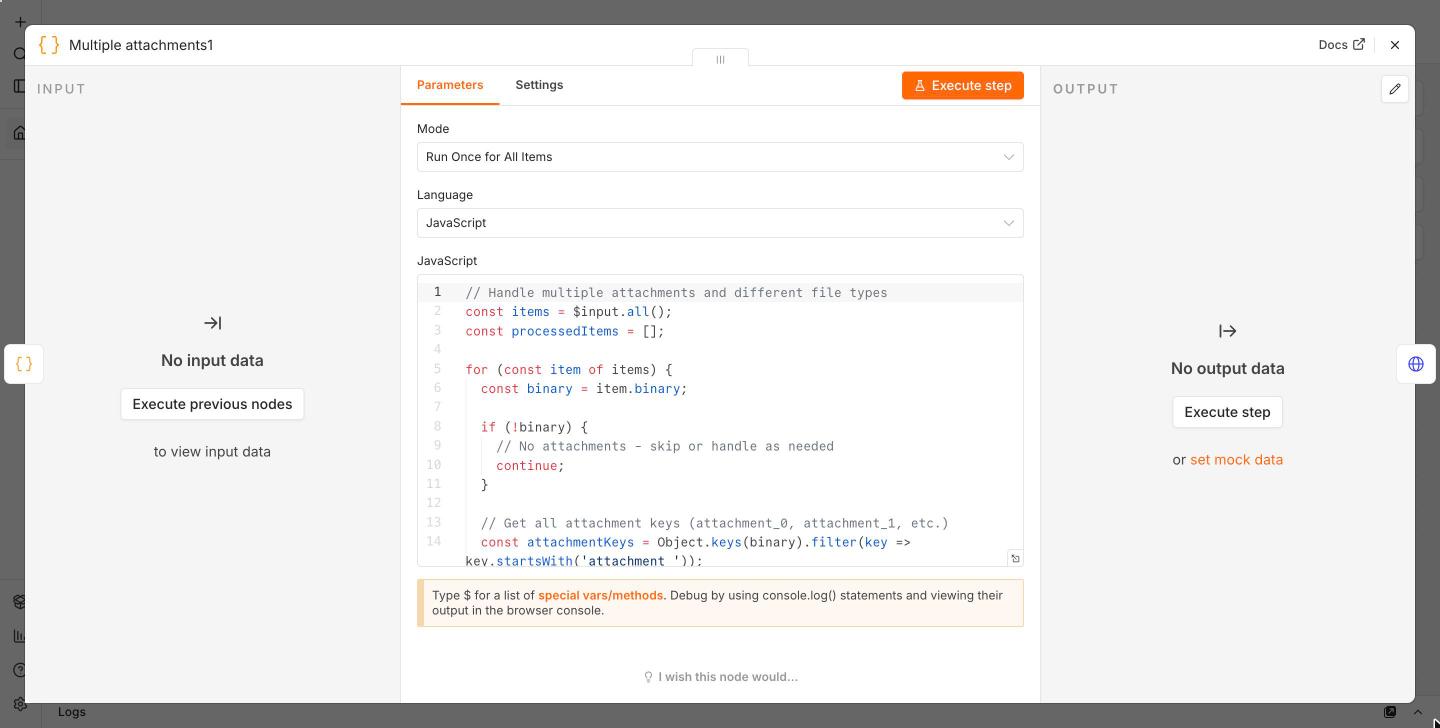
This workflow does the loop end to end. A letter arrives, a model reads it and returns a typed record rather than a summary, and four systems are updated before anyone has opened the attachment. What arrives in a person's inbox is not the letter; it is a decision about the letter, colour-coded by how quickly it needs attention, with everything already filed.
It runs on German business correspondence, which is more tractable than it sounds: German letters follow a strongly conventional layout, and the prompt is written around where each field physically sits on the page rather than asking a model to read and hope. The screens here are shown in English for readability.