Start a project
Back to work

Quotex Signal Runner

Read a trading signal out of a Telegram channel the moment it is posted, place it on the broker to the exact second, know the result before the balance moves, and never once step outside the limits you set that morning.

Quotex Signal Runner
Broker
Quotex
Signals
Telegram
Entry routes
Two
Layers
Up to 3
Sessions
Three a day

A signals channel is only worth what you can act on. The message arrives at 14:31 and names an entry at 14:37, which sounds like plenty of time until you are the one who has to open the platform, find the pair, clear the investment box, set the expiry, toggle the pending order, type the timestamp to the second and press the right button, for every signal, all day, without once fumbling a field. Miss the window by twenty seconds and the whole instruction is worthless. Do it forty times a day and the mistakes are not a possibility, they are a schedule.

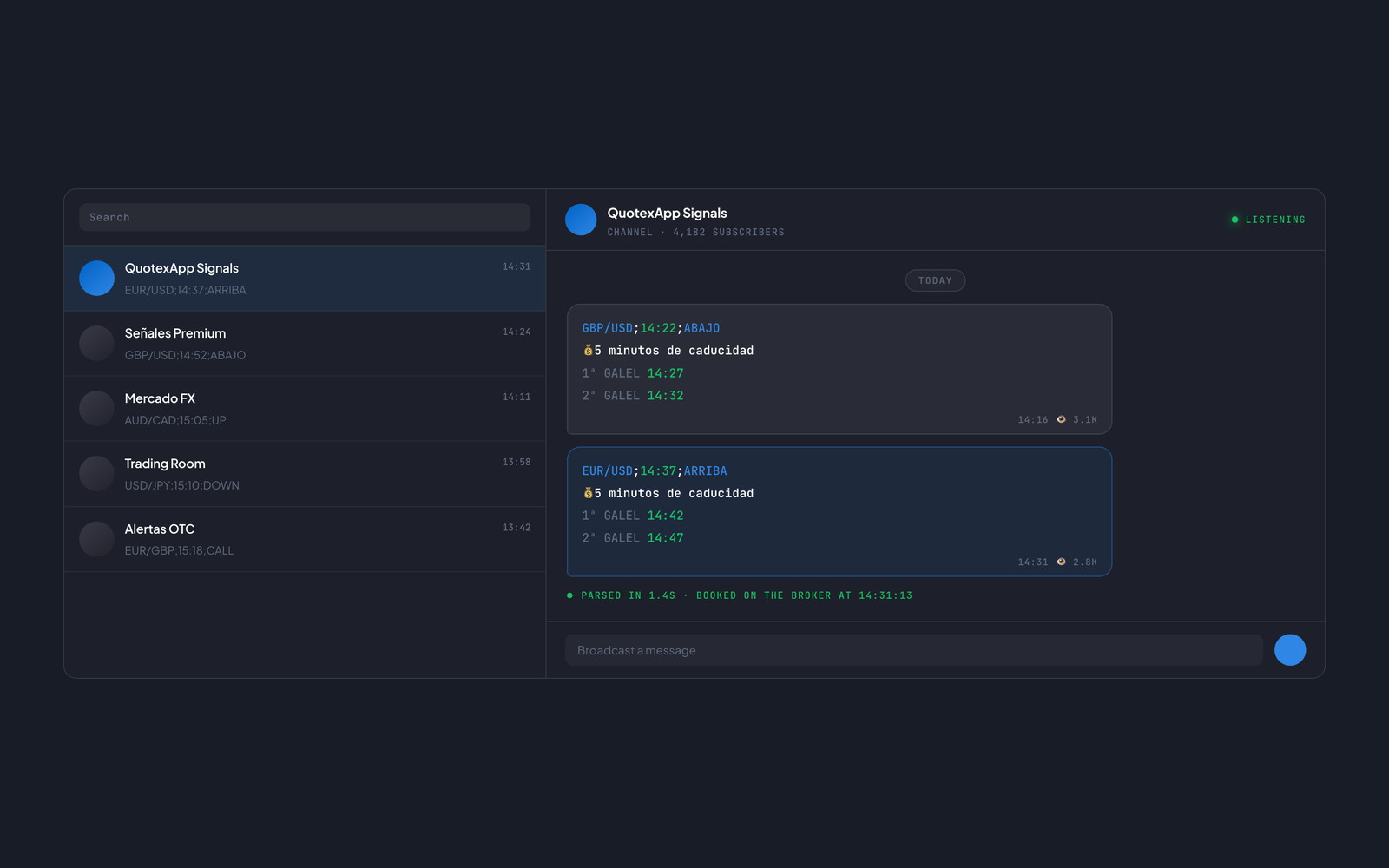
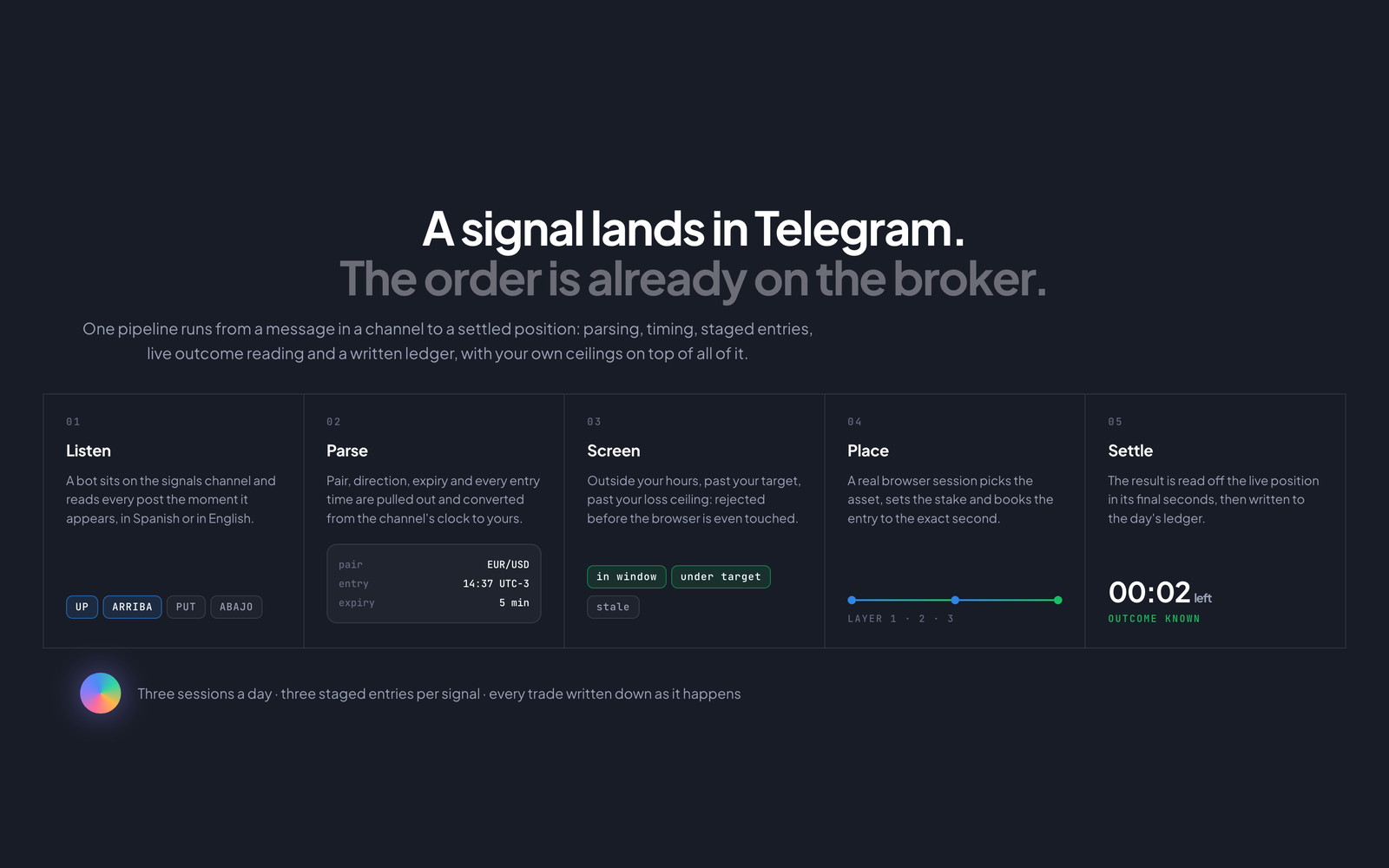
Quotex Signal Runner takes the entire span from message to settled position. A bot sits on the channel and reads every post the moment it is published, in Spanish or in English, and pulls out the pair, the direction, the expiry and every entry time it carries. The channel publishes on Buenos Aires time, so each timestamp is converted to the machine's own clock before anything is clicked. Then a real browser session on the broker does the rest, at the speed a person cannot.

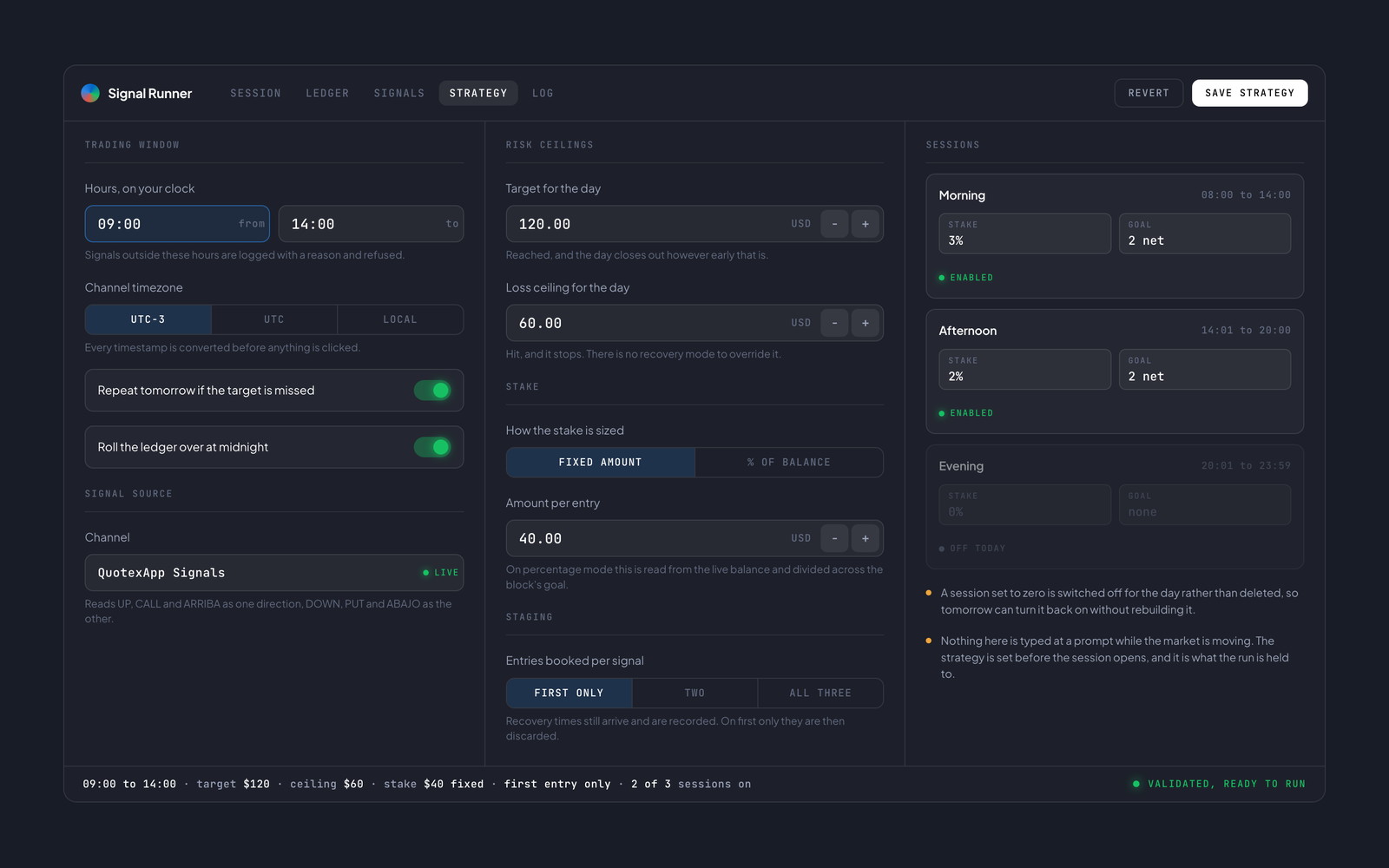
All of it is set on one screen before the day opens. The window, the target, the loss ceiling, the stake, how many entries to stage per signal and which of the three sessions are live: laid out together, validated, and stated back to you in a single line before you commit. Percentage staking reads the live balance for you. A session you do not want today is switched off rather than deleted, so tomorrow can turn it back on without rebuilding it. Nothing is typed at a prompt while the market is already moving.

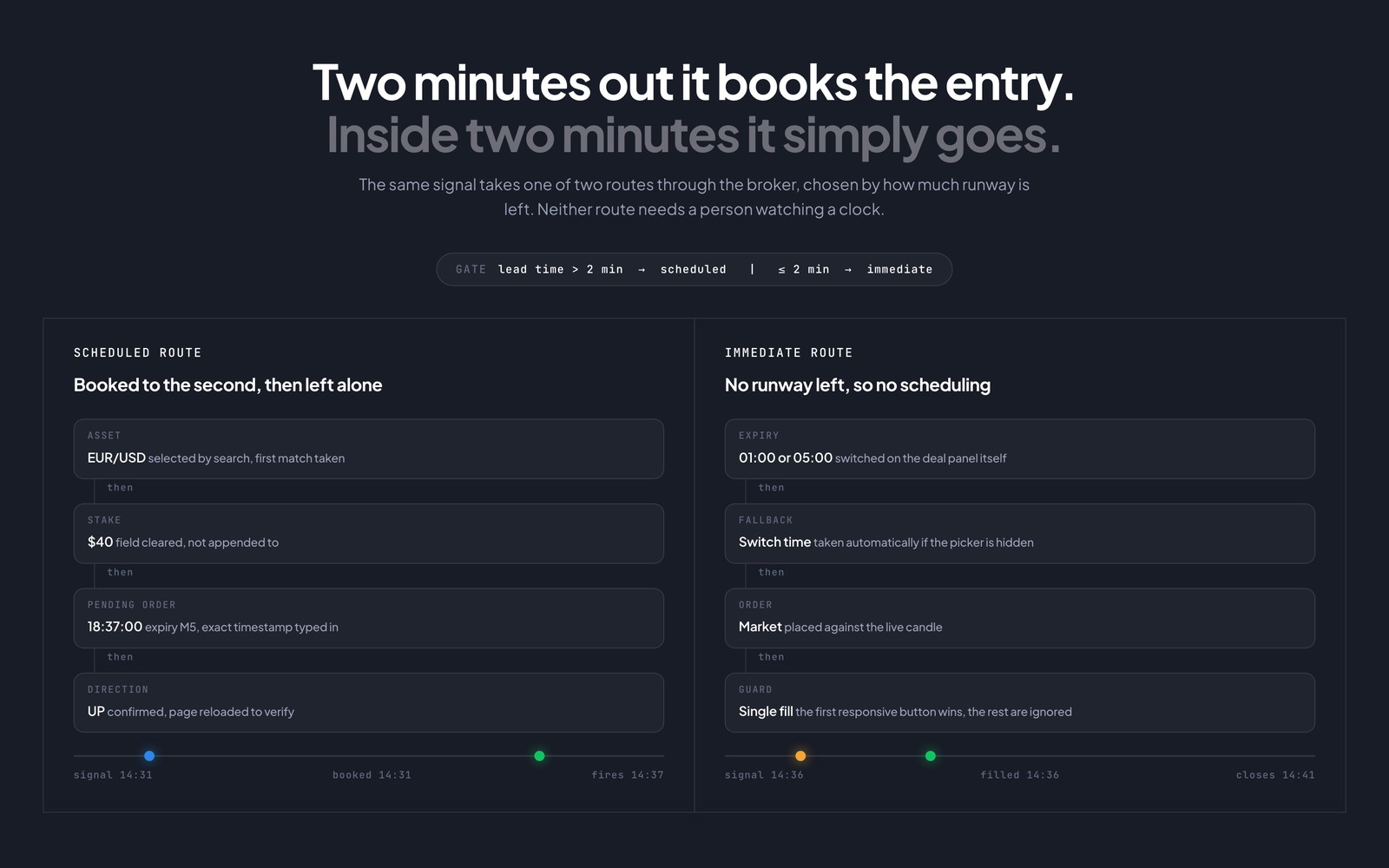
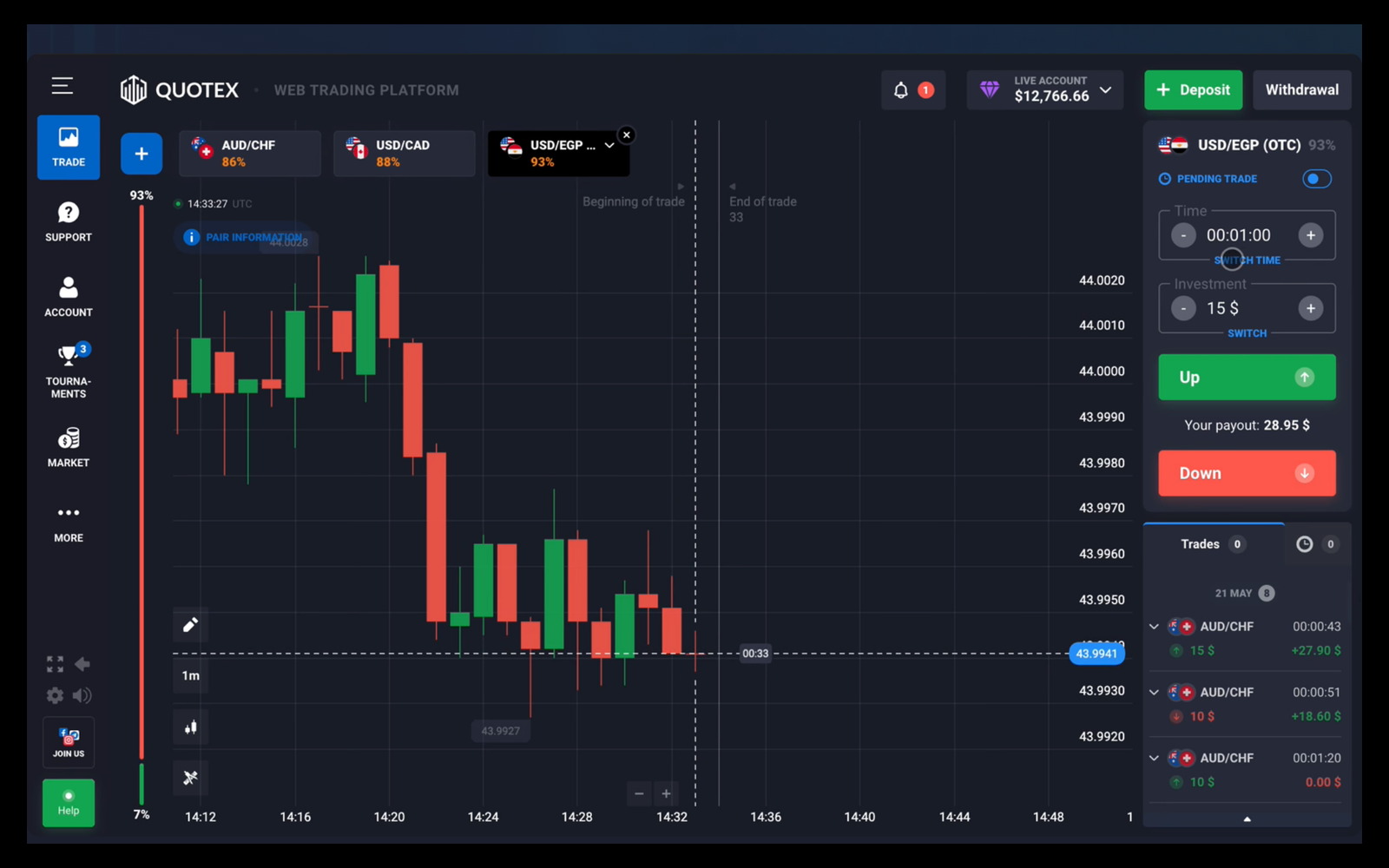
How much runway is left decides how it goes in. With more than two minutes to the entry, the order is booked as a pending trade with the timestamp typed to the second, then left alone to fire on its own. Inside two minutes there is no time to schedule anything, so it switches the expiry on the deal panel and takes the position at market instead. The same signal, two routes, and neither one needs a person watching a clock.

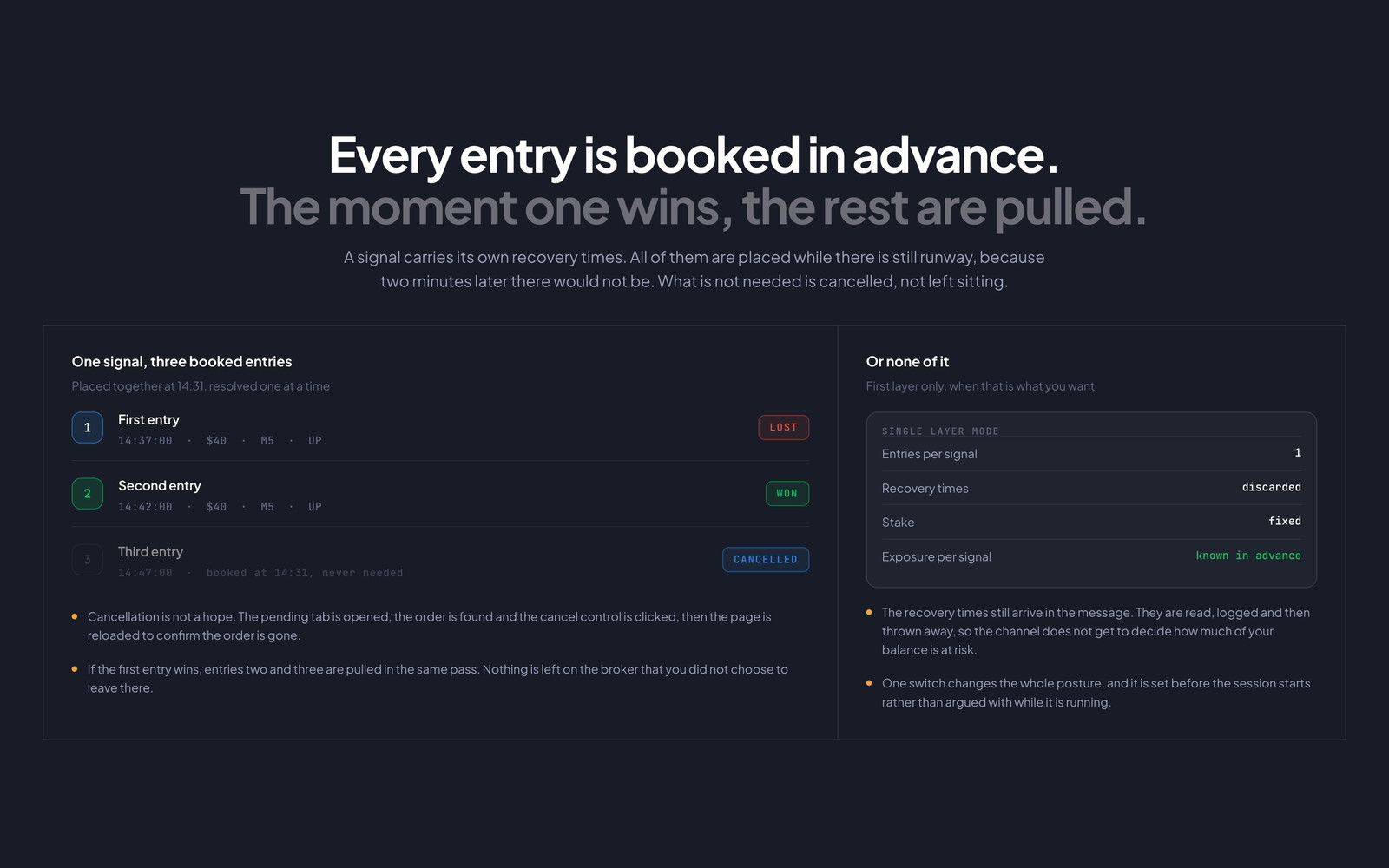
Signals often carry recovery times as well as a first entry. Those are booked up front too, while there is still runway, because five minutes later there would not be. The moment one of them wins, the rest are pulled: the pending tab is opened, the order is found, the cancel is clicked and the page is reloaded to confirm it is actually gone. Nothing is left sitting on the broker that you did not choose to leave there. If you would rather it never staged anything at all, one switch reduces it to a single entry per signal and the recovery times are logged and then discarded, so the channel does not get to decide how much of your balance is at risk.

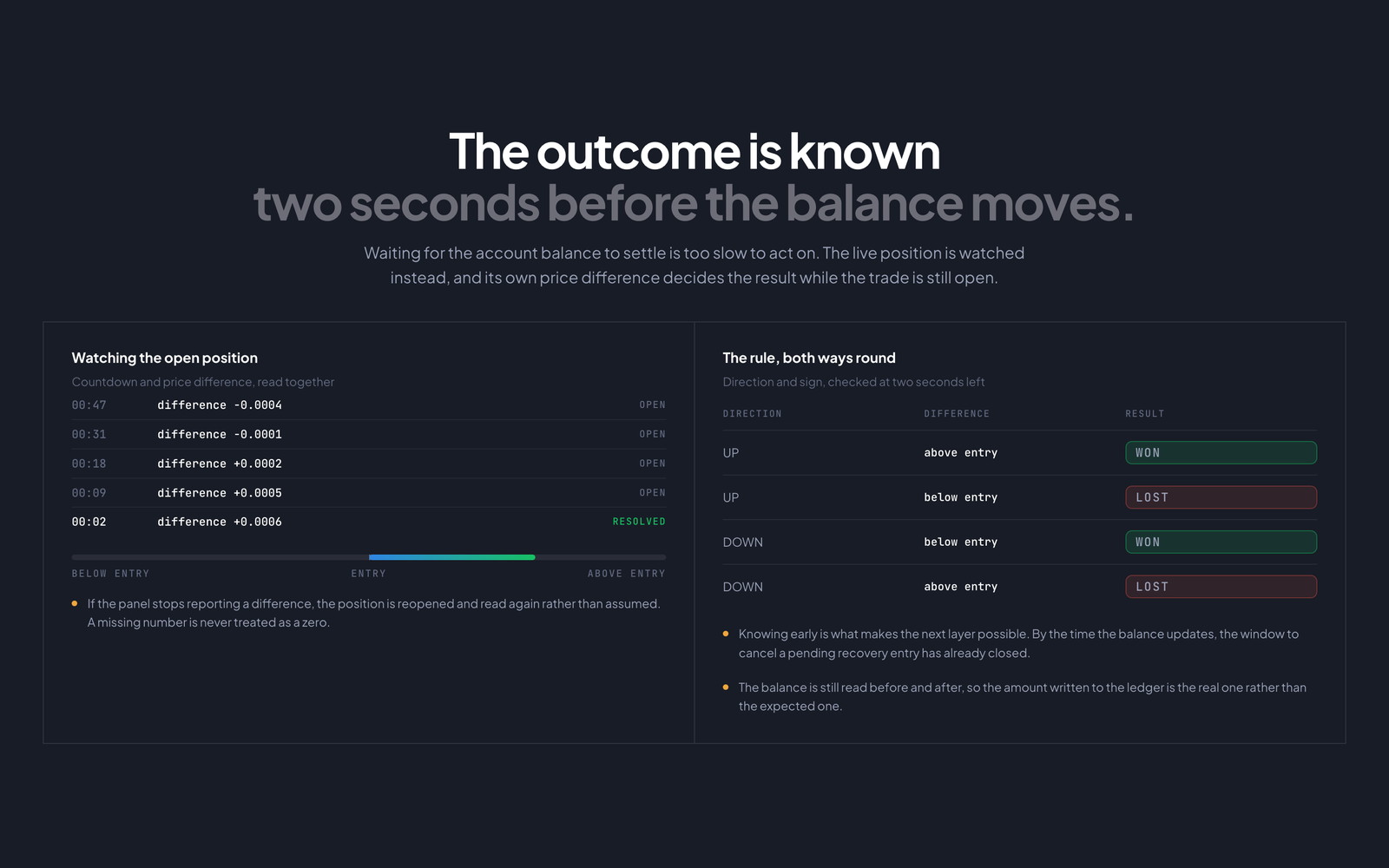
The result is known before the balance moves. Waiting for an account balance to settle is far too slow to act on, so the open position is watched directly and its own price difference is read against the countdown. In the final seconds the sign of that difference against the direction traded gives the outcome outright. That early answer is what makes the next decision possible at all, because by the time a balance updates, the window to cancel a pending recovery entry has already closed.

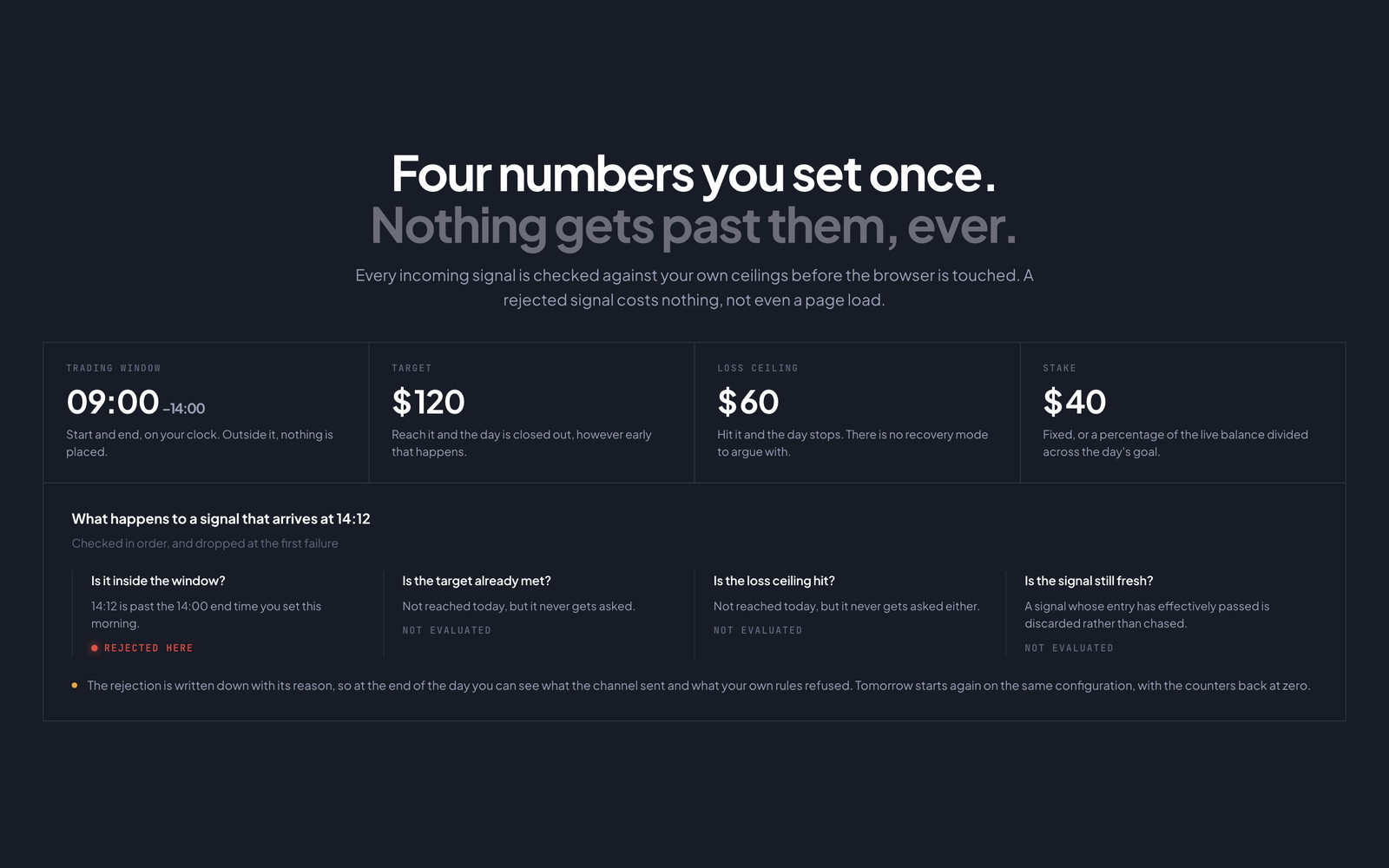
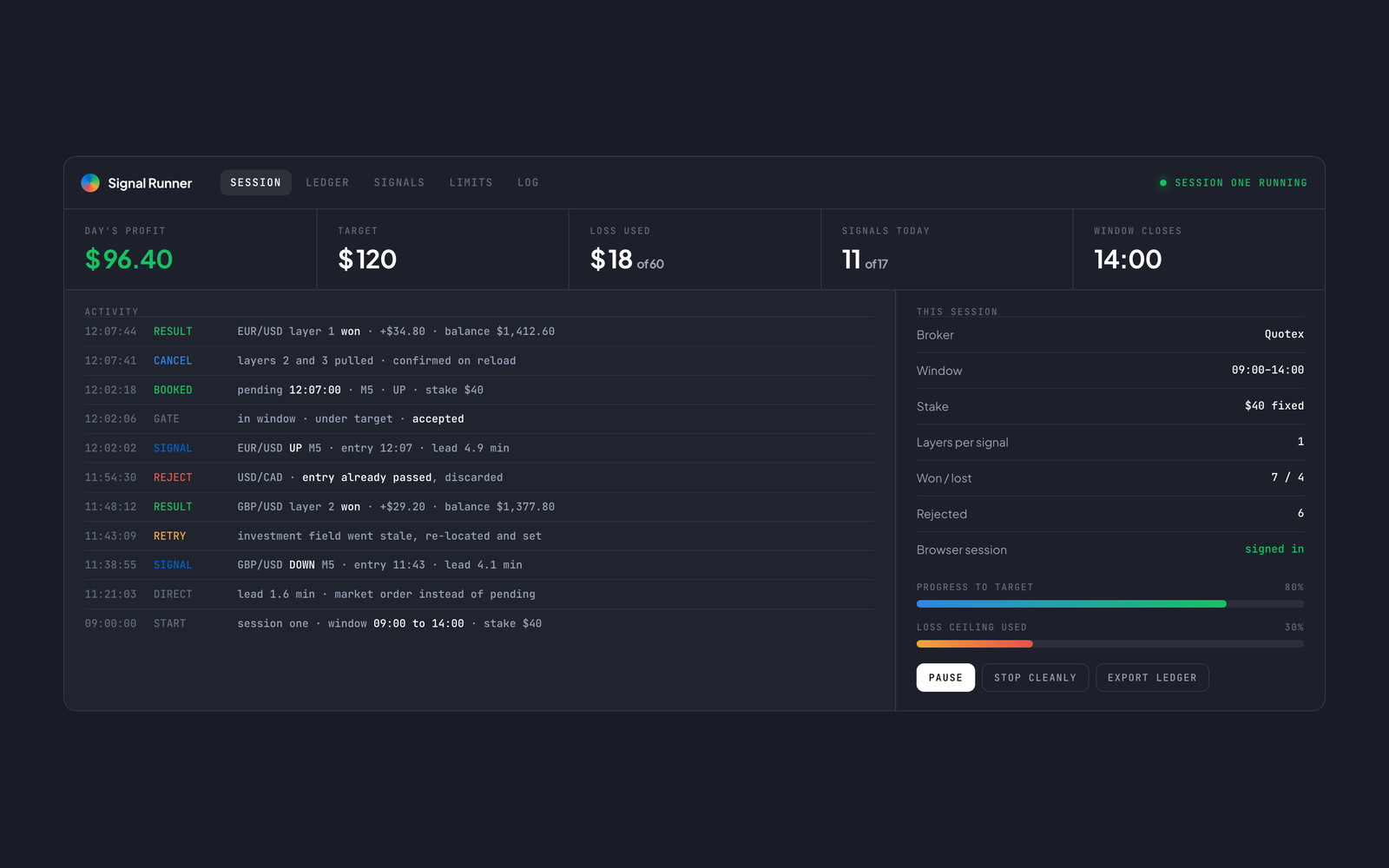
Around all of it sit your own numbers, and they are checked before the browser is even touched. A start and end time on your clock. A target in dollars. A loss ceiling in dollars. A stake, either fixed or a live percentage of the balance divided across the day's goal. Reach the target and the day closes out however early that happens. Hit the ceiling and it stops, with no recovery mode to argue with. A signal that arrives outside your hours is read, written down with its reason and refused, which is a different and much more useful thing than not arriving.

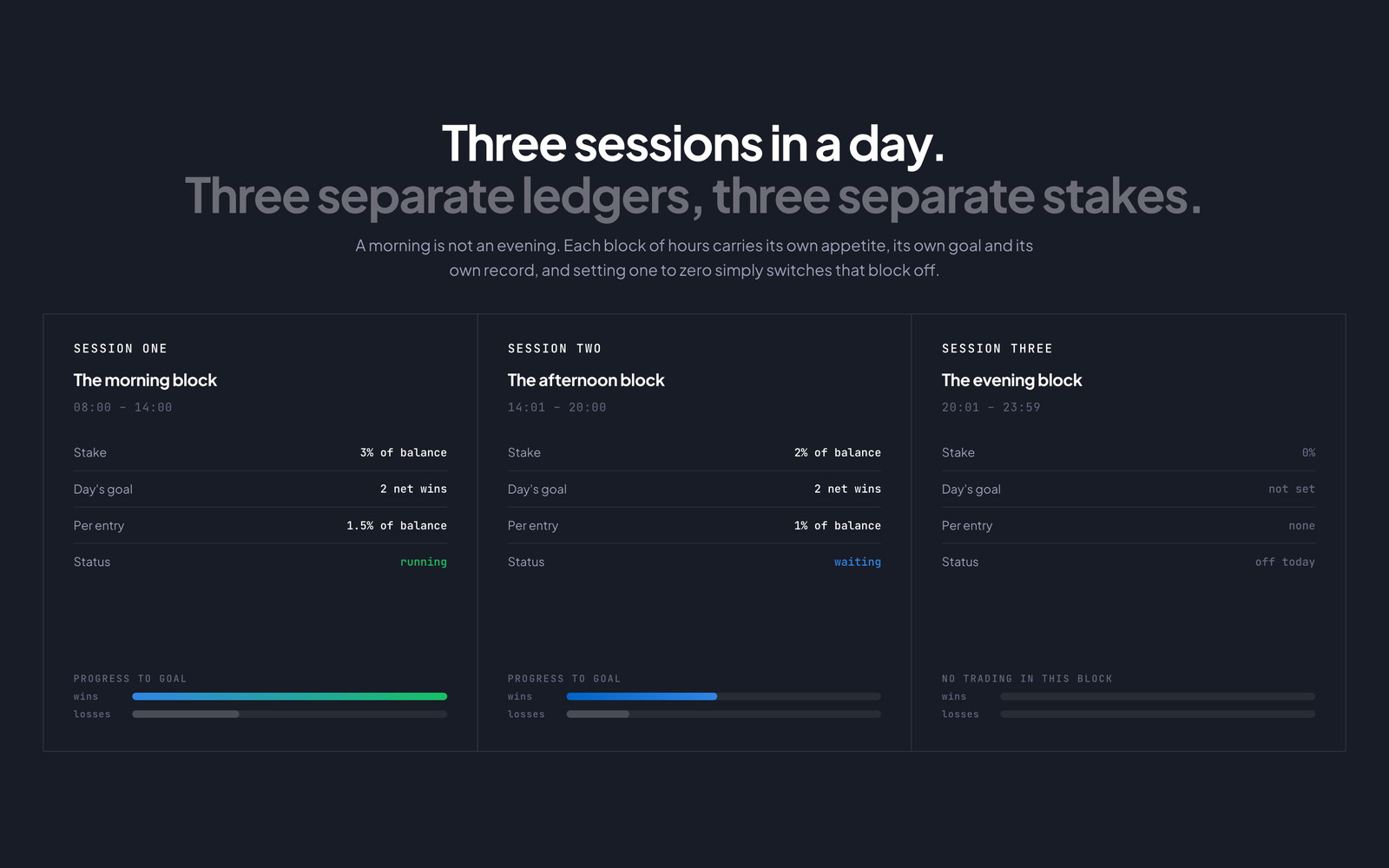
A day is not one block either. Morning, afternoon and evening each run as their own session with their own stake, their own goal and their own record, and setting one to zero simply switches that block off for the day.

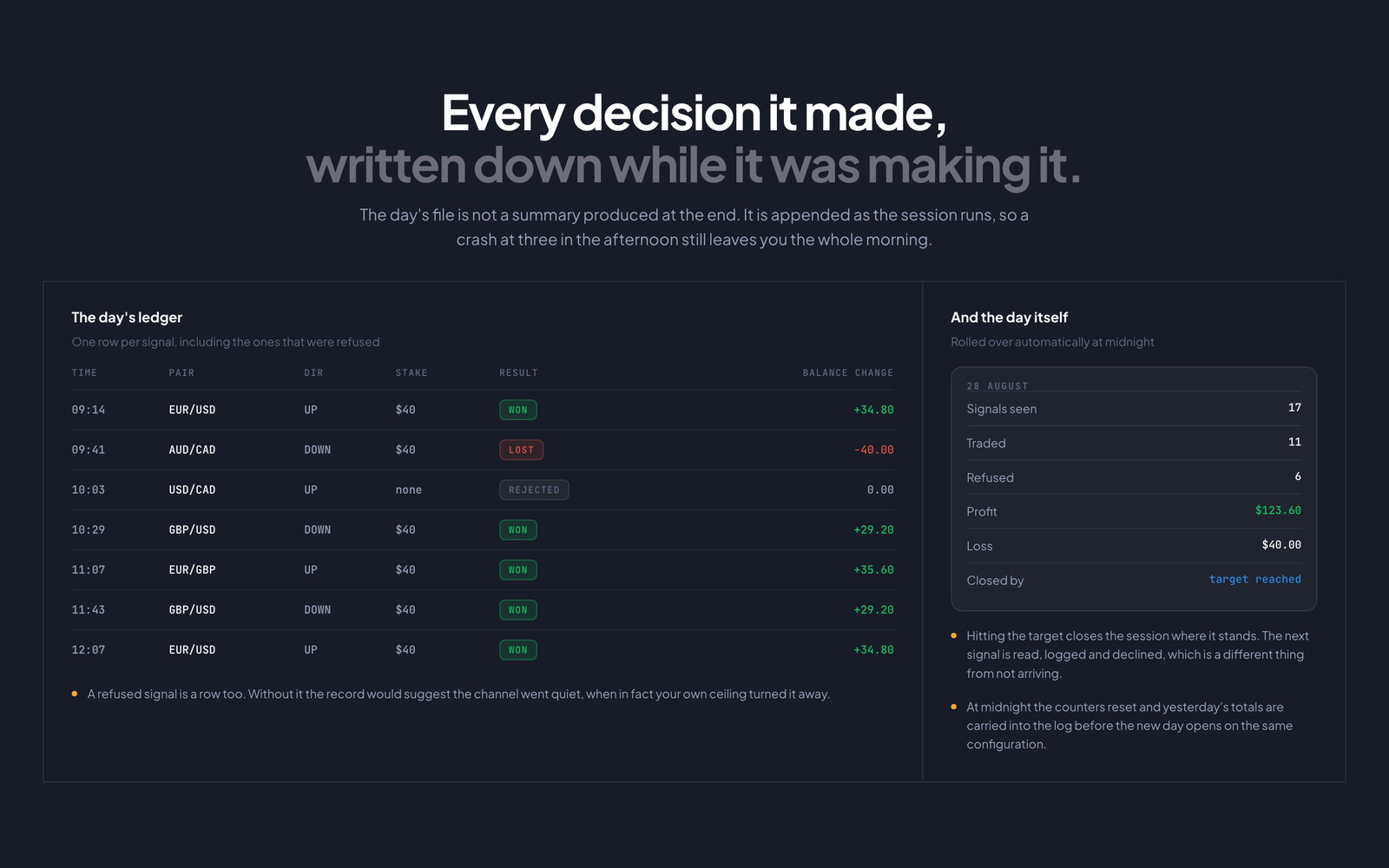
And every decision is written down while it is being made. The day's file is appended as the session runs rather than summarised at the end, so a problem at three in the afternoon still leaves you the entire morning intact: every signal seen, every one traded, every one refused and why, the stake, the result and the real balance change. At midnight the counters reset, yesterday's totals are carried into the log, and the next day opens on exactly the same configuration.
2sAhead of the balanceThe result is read off the live position while the trade is still open
3Entries booked per signalPlaced up front, and cancelled the instant one of them wins
3Independent sessions a dayEach with its own stake, its own goal and its own ledger
0Trades outside your rulesWindow, target and loss ceiling are checked before the browser is touched
Parsing

A line of shorthand in a chat, read the same way every single time

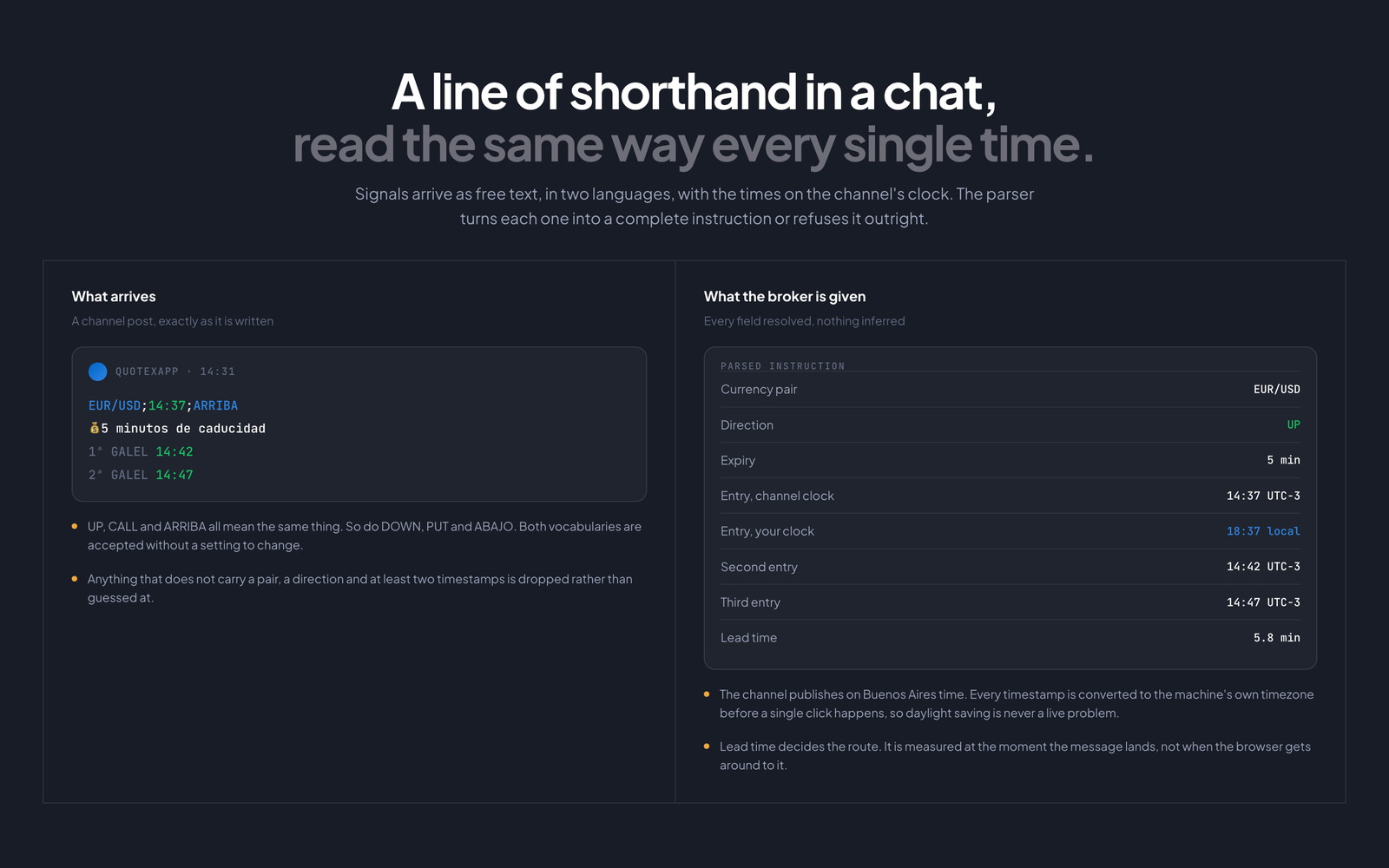
Signals arrive as free text, in two languages, with the times on the channel's clock. Pair, direction, expiry and every entry time are pulled out and converted to your own timezone before a single click happens. UP, CALL and ARRIBA all mean the same thing, and so do DOWN, PUT and ABAJO, with no setting to change.

A line of shorthand in a chat, read the same way every single time
Strategy

The whole strategy set on one screen, before the day opens

Trading window, target, loss ceiling, stake, how many entries to stage and which sessions are live: all of it laid out and validated in one place rather than answered at a prompt while the market is moving. Percentage staking reads the live balance, a session set to zero is switched off for the day rather than deleted, and the footer states the whole strategy back to you in a line before you commit to it.

The whole strategy set on one screen, before the day opens
Timing

Two minutes out it books the entry. Inside two minutes it simply goes

With runway to spare, the order is placed as a pending trade with the timestamp typed to the second and then left alone to fire. With none, the expiry is switched on the deal panel and the position is taken at market. The route is chosen from the lead time measured when the message lands, not when the browser gets round to it.

Two minutes out it books the entry. Inside two minutes it simply goes
Staging

Every entry is booked in advance, and the moment one wins the rest are pulled

Recovery entries are placed while there is still time to place them. When one resolves in your favour the others are cancelled outright, confirmed on reload rather than assumed. Prefer a single entry per signal and one switch gives you that, with the recovery times logged and then discarded.

Every entry is booked in advance, and the moment one wins the rest are pulled
Detection

The outcome is known two seconds before the balance moves

The open position is watched directly and its own price difference is read against the countdown. In the final seconds the sign of that difference against the direction traded settles the result. A missing reading is never treated as a zero: the position is reopened and read again.

The outcome is known two seconds before the balance moves
Limits

Four numbers you set once, and nothing gets past them

A trading window on your clock, a target in dollars, a loss ceiling in dollars and a stake. Every signal is checked against them before the browser is touched, so a rejected signal costs nothing, not even a page load. Reach the target and the day closes out. Hit the ceiling and it stops.

Four numbers you set once, and nothing gets past them
Sessions

Three blocks in a day, each with its own appetite

Morning, afternoon and evening run as separate sessions with their own stake, their own goal and their own ledger. Stakes can be fixed or taken as a live percentage of the balance, divided across that block's goal. Setting a session to zero switches it off for the day.

Three blocks in a day, each with its own appetite
Resilience

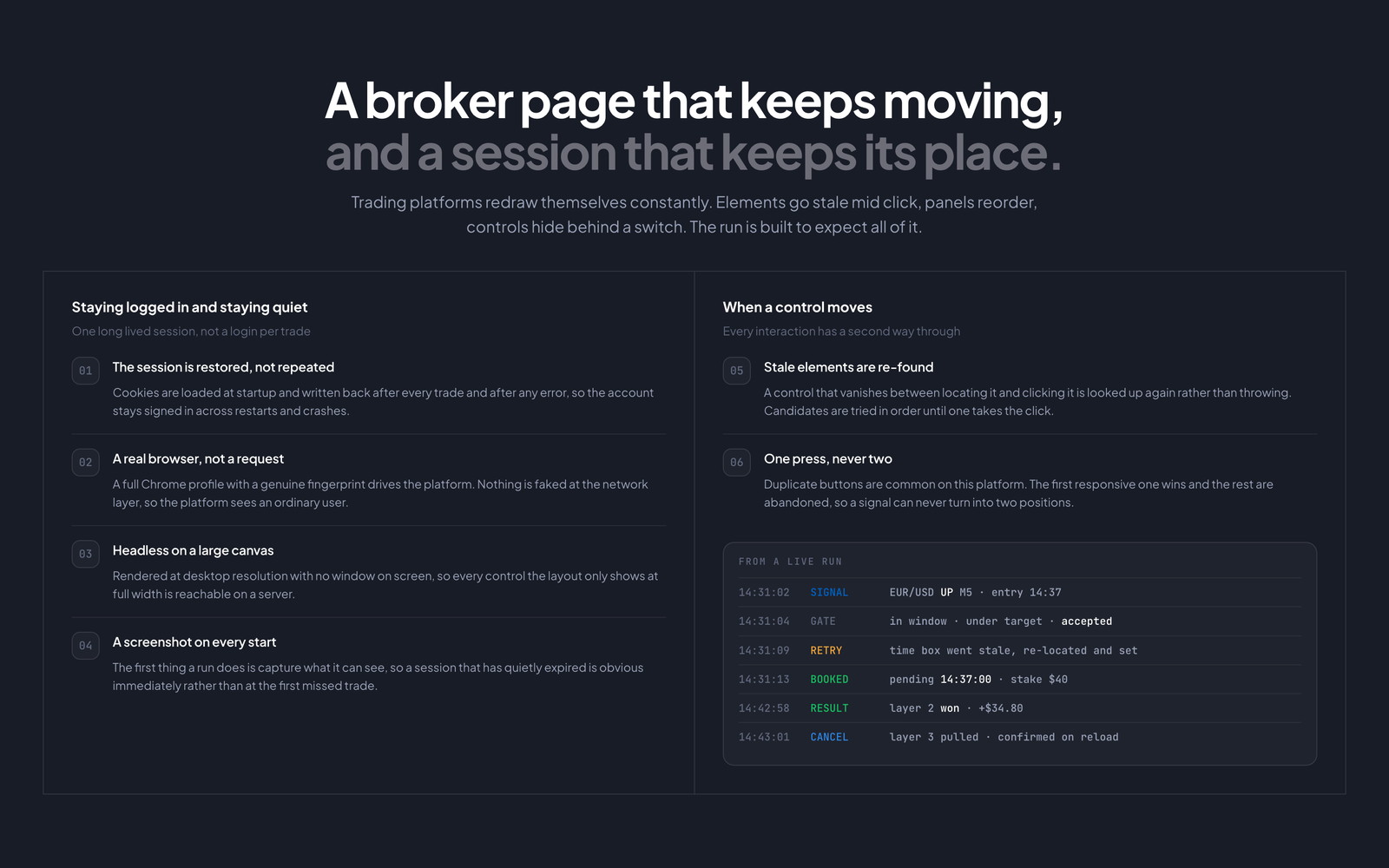
A broker page that keeps moving, and a session that keeps its place

Cookies are restored at startup and written back after every trade, so the account stays signed in across restarts. Controls that go stale between locating and clicking are found again rather than throwing, duplicate buttons resolve to exactly one press, and every run opens with a screenshot so an expired session is obvious immediately.

A broker page that keeps moving, and a session that keeps its place
Record

Every decision it made, written down while it was making it

The day's file is appended as the session runs, not summarised at the end. Every signal seen, every one traded, every one refused and the reason it was refused, with the stake, the result and the real balance change. At midnight the counters reset and the next day opens on the same configuration.

Every decision it made, written down while it was making it

How a run goes

  1. Set the day

    Your trading window, your target, your loss ceiling and your stake. Entered once, before anything starts.

  2. Point it at the channel

    The bot joins your signals channel and reads every post as it publishes, in either language.

  3. Let it screen

    Each signal is parsed, converted to your clock and checked against your limits before the browser is touched.

  4. Watch it place

    Scheduled to the second when there is runway, at market when there is not, with recovery entries booked alongside.

  5. It settles itself

    The result is read off the live position, unneeded orders are cancelled and the totals are updated.

  6. Read the ledger

    Every signal, traded or refused, with its reason and its real balance change. Tomorrow starts on the same configuration.

Want something like this?

We build internal tools, automation and AI systems like this one. Tell us what you are trying to ship.

Start a project